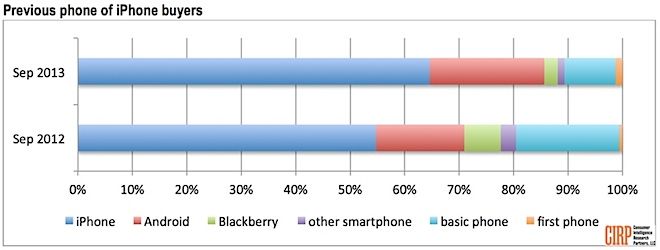
Android may have greater market penetration than ever before, but it also has more defectors than ever. According to new data, in fact, more Android users are migrating to the iPhone than ever before.
Apple TV is still awaiting its apparently game-centric overhaul, but the Apple TV this rumor’s about is the long-awaited Apple television set we’ve heard reports of for years now. Of all the reports we’ve heard, the most oddly specific was one from analyst Peter Misek. He claimed Apple would make a television “display, gaming center, media hub, computer, home automator, etc.” that would retail for $1,250, bring in 30 percent gross margins, feature IGZO panels from Sharp, and be called the iPanel. Oh yes, and Apple was building 5 million of them in May 2012.
Of course, absolutely none of this wound up happening. Maybe the shipments sunk on their way over to Cupertino?
It’s hard to think of two analysts as different frome one another as Gene Munster and KGI Securities analyst Ming-Chi Kuo. While Munster has foolishly prattled on, predicting an Apple HDTV set every single year for at least five years without it coming true, Ming-Chi Kuo draws upon proven supply-chain sources across the Far East to make predictions about upcoming Apple products with almost unerring accuracy. When Munster opens his mouth, everyone laughs; when Kuo opens his, everyone listens.
So it’s odd to be writing a story in which Ming-Chi Kuo and Gene Munster’s predictions are lining up for a change, but it’s an odd world. In a recent note, Kuo argues that not only will an A7-powered Apple TV will be coming next year, but Apple will enter the living room with a proper HDTV set in 2015.
“It’s a magical world, Hobbes, ol’ buddy! Let’s go exploring!”
If you’re a comic lover, the world of iBooks just got a little bit more magical, as Bill Watterson’s classic comic strip about a boy and his stuffed tiger has come to Apple’s e-book store.
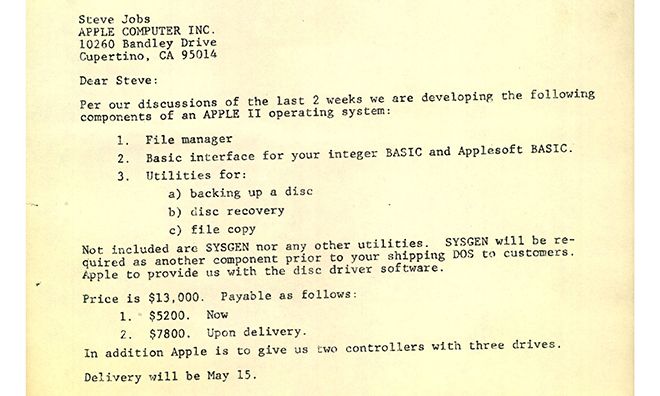
Apple’s never been a particularly vocal advocate of open source, but thanks to a collaboration between two vintage computer museums, you can now delve into the sweet, sweet code of Apple’s first operating system.