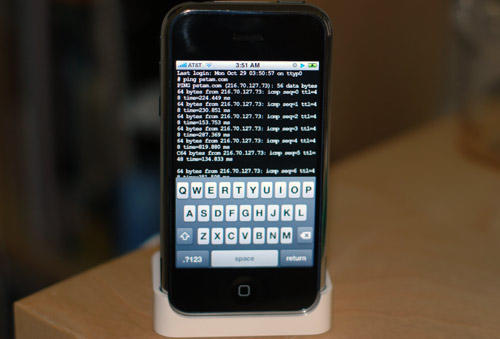
The iPhone Dev-Team will not release a jailbreak for iOS 4.0.2/3.2.2.
“With FW 4.1 still in its beta stages, it makes no sense to escalate the ‘cat & mouse’ with Apple for FW updates that only fix the jailbreak holes,” the Dev Team says on its blog. “To quote WOPR, ‘the only winning move is not to play.'”
Apple has settled claims with state regulators who allege the company mishandled electronic waste. Photo: Thomas Dohmke
Apple in named among 22 other high tech firms in a lawsuit by Ganas LLC. The company claims the Cupertino, Calif.-based iPhone maker and others violated a patent regarding object orientation.
The lawsuit, filed in the Eastern District of Texas, involves patent No. 7,316,913, which covers an “XML/HTTP-based protocol for sending messages from one object to another across the Internet in a platform independent manner.” Ganas claims Apple, HP, Adobe, TiVo, Xerox and others violated patents 7,325,053, 7,734,756 and 7,007,094.
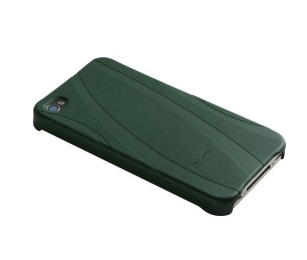
The corn fields of Nebraska are at the heart of these new plant-based iPhone 4 cases.
Bioserie cases are offered in six colors (including two shades of green) and unlike most plastic cases, it can be recycled or industrially composted.
These cases are 100% made from plants, namely Ingeo biopolymer — boiled down that’s a corn-based polymer often used in those earth-friendly coffee cups and food containers — plus a proprietary mix of biobased components. (Side note: even though the main ingredient in Ingeo is dextrose made from No. 2 yellow dent corn, they still don’t recommend you eat it but the material is non-toxic).
Going green will cost you $34.95, cases ship in early September.
The company already offers plant-based cases for iPhone 3G/3GS, iPod touch and iPod nano.
A plant-based case for the iPad is in the works for September.
Another story today of a dramatic, satisfying – yet sadly illegal – way to end one’s career: go out for some brews after a hard day at work, then return with a gun and shoot the company server.
A Salt Lake City mortgage company employee allegedly got drunk, opened fired on his firm’s computer server with a .45-caliber automatic, and then told police someone had stolen his gun and caused the damage.
I’ve often had this urge, but not owning a firearm nor wishing to go to jail, subtler methods of sabotage have had to suffice.
The official Netflix streaming app for iPhone and iPod touch hit the App Store this morning. The free download allows anyone with a monthly Netflix subscription of $8.99 or more to watch unlimited streaming movies and TV on the iOS device of their choice.
I’ve been playing with it since I woke up today, and I’m quite impressed — video looks phenomenal on my 3GS, and performance over both WiFI and 3G have been great (which, as a San Franciscan who resides in a neighborhood AT&T ignores, is very impressive).
My two minor quibbles with the app are both interface-related: NetFlix opted to represent titles to watch with large icons, which makes it a labor to scroll through. Worse, it doesn’t provide a thumb on the right side to provide any sense of where you are in the middle of a long list. Search works very well, however.
But these are minor complaints. Frankly, this puts HuluPlus to shame. Better selection, better performance, and no ads. Download the crap out of this. Get it here.
We’ve seen commercials intrude into nearly every part of our lives, from television, games and the internet. Now comes word Apple is considering injecting its iAds into eBooks. But how long can publishers hold out as they search for a lifeboat?
With the iPad and the plummeting prices of ebook readers “what room is left for publishers’ profits,” asks the Wall Street Journal. The report views iAds in e-books as inevitable.
If past behavior is any indication of the future, Apple’s September 1 announcement could mean more coins in the pockets of savvy investors – or so says one analyst. Since 2005 (except 2008), the announcements resulted in an average 12 percent increase in Apple stock price by the end of the month. That rise nearly doubles to 22 percent by the end of the year.
“We believe that investors generally anticipate the Sept. event by the beginning of the month, and anticipation builds ahead of the holiday shopping season with Apple’s iPod lineup (along with Macs and other products) set for holiday sales,” Piper Jaffray analyst Gene Munster told clients Wednesday. “However, keep in mind that historical trends are not necessarily an indicator of future events,” he warned.
Although Spotify is “the best desktop music player ever,” the revolutionary music service is only available for people located in Finland, France, Norway, Netherlands, Spain, Sweden and the United Kingdom. You can’t get it in the U.S.
This is enforced by Spotify by checking your IP Address and making sure that you are in one of those countries. As such, anyone in the U.S. that goes to https://www.spotify.com/int/get-spotify/overview/ will get a message that Spotify is “Not available in your country yet.”
Don’t worry though, because with this walkthrough I’m going to show you how you can get this great music service on your computer and on your iPhone/iPod Touch.
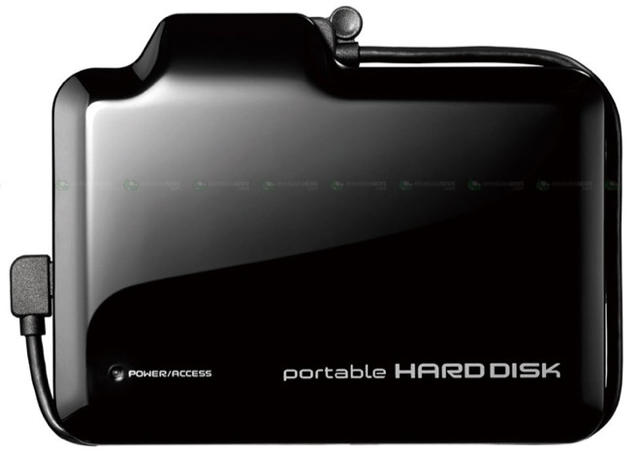
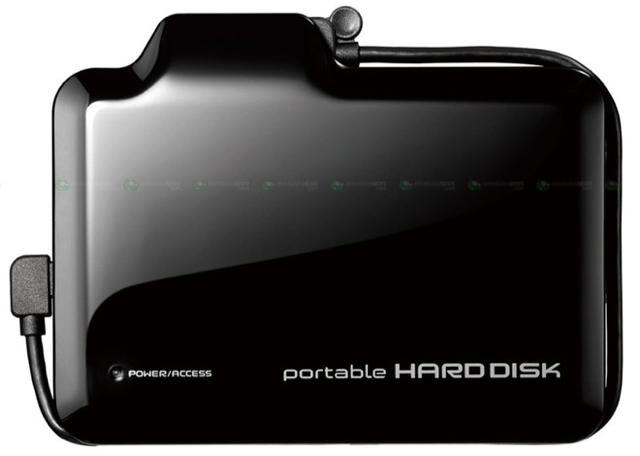
I-O Data’s new portable hard drive has the standard specs for its class, maxing out at USB 2.0 and 500GB of storage, but it’s the HDPN-U500/V’s video functionality that intrigues: just plug it into a Sanyo Xacti, JVC Everio or Sony Handcam camcorder and it’ll suck in all the video with no bridge computer required.
The big advantage here is to video bugs who find themselves filling up their camcorder’s storage out in the field. If they buy I-O Data’s drive, they can leave the MacBook at home and if they fill up their camera, easily slurp out the footage and keep shooting within seconds.
It’s hard to say, but since it hooks up to your camera via USB, it could theoretically be used with an iPhone too. I’d be interested to know if the drive can offload iPhone 4 videos if you connect it with an Apple Connector Cable.
The seems to be Japan only right now, so if you want one, you’ll need to find an import shop and lay down ¥14,600 (or about $170) for the drive. That’s actually very expensive for a 500GB drive, but if you’re constantly running out of drive space on your camcorder, it may very well be worth it.
Dr. Johan Sanneblad has written, Filerr, a new MAC OS X file utility. The application assists users by making sure that the files they are sharing on their Mac are compatible with Windows computers and Windows OS formatted USB thumb drives.
The application runs in the Mac OS X Menu Bar and will allow you to locate and change the names of files in Finder so they can be copied to Windows OS based systems, drives, and cloud services like Dropbox. Anytime a file with an incompatible filename is created the program will warn you via a Growl notification. Filenames that are deemed incompatible begin with a space character or contain one of the following characters: \ / : * ? ” < > |.
The application will allow you to work with multiple files and has some filtering options to prevent warnings popping up on files in specific folders. You set those folders to be ignored and you can set others to be watched. Files drag and dropped into the watched folders will be checked for compatibility.
Filerr is available as a single-user license for $6.95 and requires Mac OS X 10.5 or higher. You can download a free trial here.
For those of us poor souls still feeling for the ghost of Google-gobbled SimplifyMedia and looking for a way to easily share our media across our computers and social networks, Libox has stepped in to fit the bill.
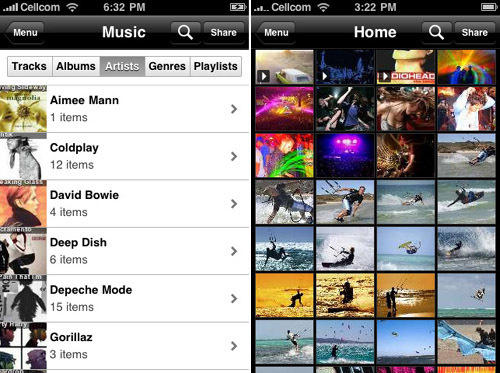
Think of Libox as a personal P2P streaming application for your media. You simply download the software for the PC or Mac and let it scan your computer for media like movies, music and images. Once it’s done, any medial then be available for streaming on any computer you own, or even on your iPhone or iPad through a free (and attractive) universal app.
Want to share your media with friends? That’s easy enough too: just add them as contacts and they’ll be able to play any media you select to share. You can even selectively share media: Leander can take a look at my movie collection, sure, but he’s not getting access to the porn directory.
The iPhone 4’s new 720p video recording capabilities and the fantastic iMovie for iPhone app make shooting beautiful movies on the run an absolute snap, but sharing them is another story. The second you try to upload your gorgeous, high-def movie to YouTube, the iPhone 4 crunches your video down to a low-quality 360p clip.
What the heck, Apple? Don’t you want us to show off your phone’s video capabilities? That forced compression is plenty irritating, but an enterprising App Store developer has now remedied the problem in the form a free application called 720Tube, which does exactly what it says: makes sure your videos are shared in the same quality they were shot.
There’s something heartwarming about a Mac software developer so dedicated to maintaining the quality of his product that, discovering a pirated version of his software on the Pirate Bay that had been shoddily cracked at the expense of the user experience, he actually told the cracker how to do it more elegantly.
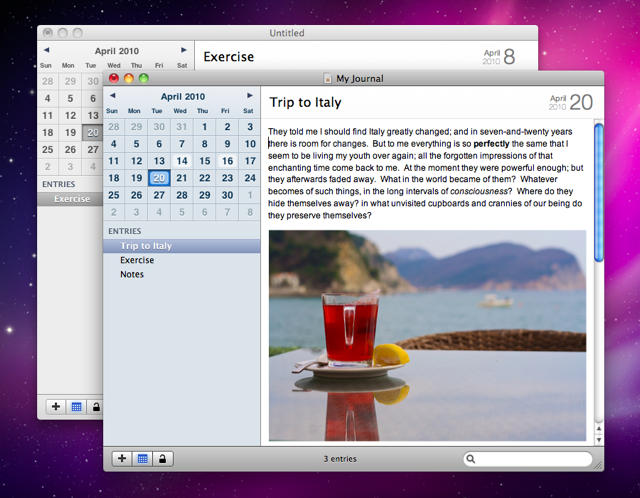
That’s just what Coding Robots dev Dmitry Chestnykh did when he found a version of his journal-taking application, Mémoires, up on the popular Bittorrent search site.
Incensed at the crumminess of the crack, Chestnykh wrote the following to the Pirate Bay.
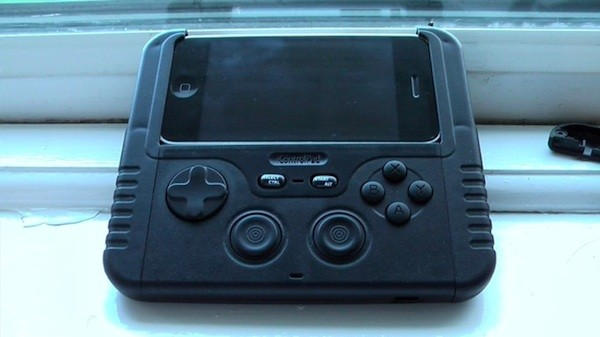
The iControlPad has been teased for so many years that the case — which promised to allow you to add physical gaming controls to your iPhone or iPod Touch — was the front contender in our own internal Vaporware awards. Heck, just a month ago, I wrote: “The sad fact of the matter is we’re never going to see the release of the long fabled iControlPad.”
So much for my soothsaying and shows what I know. After two and a half years of development, the very first iControlPad has finally popped off the production line as the sexy unit you see above. The first run of the device will be limited to 3,000 units, and orders should start being taken “soon.”
That’s great news for iPhone gamers, particularly emulation enthusiasts, but what impresses me most about the new design is its modularity: the bumpers actually pop off and can be changed to theoretically support another smartphone, or even an updated iPhone design.
Really neat. We’re glad to see the iControlPad’s long transition from dream to product finally nearing the end its final days.
The light at the end of the tunnel seems to be glowing ever brighter for iPhone 3G owners running iOS 4. In addition to Steve Jobs’ recently publicized email claiming a software update coming soon to fix the problems, the Blogosphere and Twitter are also carrying reports of big performance improvements with recent betas:
Tests with a beta version of Apple’s iOS 4.1 on a well-used 3G suggest that the new OS has increased the phone’s responsiveness. Indeed, apps load much more quickly, text entry is much smoother and the phone no longer slows down beyond the point of usability when more than one browser window is open. [The Next Web]
These have been among the most widely reported problems.
Apple’s iOS devices clearly aren’t built with styluses in mind, and Apple institutionally loathes them but some of us feel a more nuanced and precise control when using styluses, particularly when it comes to digital drawing.
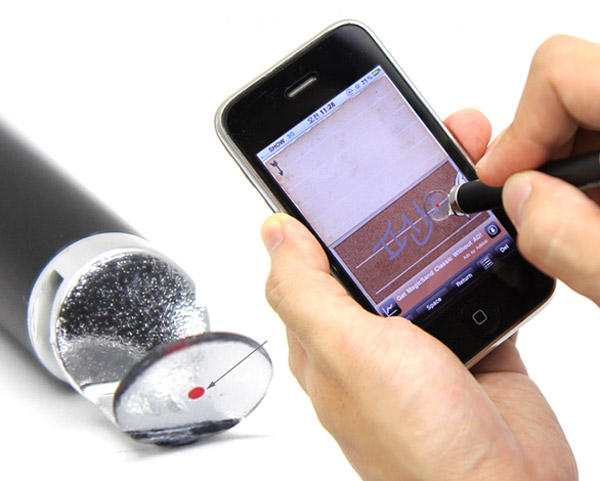
There’s a lot of companies who are willing to sell you a little plastic pointing stick for your iPad, if you don’t just go the cheap route and use a SlimJim instead, but one problem with these styluses is that they obscure what’s underneath the stylus, making it hard to see what letter you’re tapping on the onscreen keyboard or even if you’ve completed that circle.
We’d prefer someone figure out how to make a fine-tipped stylus work with an iPad, but until then, the DAGi Pen is a neat solution: it makes the tip of the stylus transparent and suspends a red dot in the middle so you always know where the stylus contact area is in relation to your iPhone’s display.
Pretty clever, and cheap to boot: each DAGi Pen costs just $20.
The first of the would-be, Android-toting iPad killers is about to arrive in the Samsung Galaxy Tab. It’s set to debut at next week’s IFA conference in Berlin, but as you can see, Samsung’s already teasing the device.
We’ve got to admit: the rapid fire staccato of intercut images in the promotional video actually does get our pulse pounding a bit… well, as much as our pulse ever pounds for an Apple knock-off product, that is.
As far as specs, nothing’s official except it’s 7-inch form factor yet, but the Galaxy Tab is tagged to feature an AMOLED display (distressingly rumored to run at a resolution of only 800 x 480, the same resolution as the four-inch Galaxy S smartphone) and run Android 2.2. As you can see, the Tab’s shape is different than the iPad too, allowing for one-handed holding.
The one obvious advantage the Tab has over the iPad is video-calling support, thanks to a forward facing camera… but that camera’s also rumored to be pretty chintzy, only supporting a 320×240 resolution. There’s also a rear mounted 3.1MP camera, according to scuttlebutt.
Can the Galaxy Tab trump the iPad? We doubt it: spec-wise, the Tab is looking underwhelming, even in the areas where it bests the iPad. Still, can’t fault an electronics manufacturer for trying.
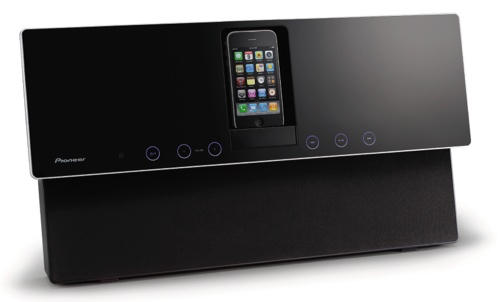
Pioneer’s latest iPod speaker dock is the KODO XW-NAW1, which sounds more like a jive-speaking droid’s designation than a product to be interested in, but look beyond the engineer branding and what you will find is a gorgeously svelte wafer of a dock that doesn’t sacrifice big sound for footprint.
Perhaps designed to be wall mounted, the KODO XW-NAW1 is only 83mm thick, but still contains a couple of thirty watt speakers. The buttons are as touch-sensitive as your iPhone, and while the ports on the KODO are few, there is a component video output for hooking up to a TV.
It’s a gorgeous dock that would elegantly fit any entertainment center decor, but one big problem is the small width of the docking bay, meaning iPad owners can’t avail themselves of the KODO’s docking abilities without snapping their tablet in half and cramming it in a crunch of aluminum and glass into the bay.
It’ll also be pretty expensive when it drops in September, costing around $300.
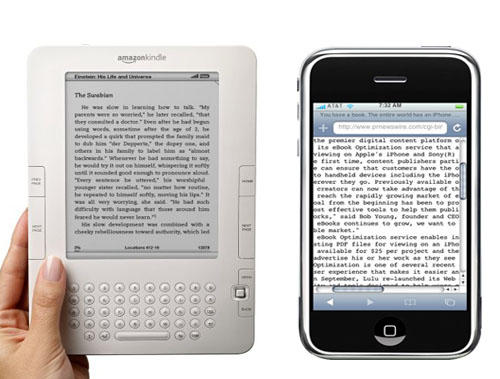
Reading Amazon press releases about their Kindle e-reader reminds one of the Cold War days when Soviet analysts interpreted the meaning of which leader were present during Red Square parades or diplomats fired off long missives about a cryptic statement from Chinese leaders. The Seattle-based Internet bookseller is no different when it trumpets its e-reader.
“Kindle is the best-selling product on Amazon.com for two years running and our new generation Kindles are continuing that momentum,” Amazon Kindle senior vice president Steve Kessel said in a Wednesday announcement. Lacking, however, were specific sales figures.
Despite the rumblings from companies looking to knock the iPad off its pedestal, Apple will dominate the tablet market at least through 2012, one analyst believes. The iPad will account for 74.1 percent of worldwide tablet sales in 2010 with the figure slipping to 61.7 percent of the market by 2012.
“If recent history is a lesson, it will take some time for these companies to get their products to market, longer for them to offer necessary software support and infrastructure, and an even lengthier period to begin to rival the overall user experience Apple is able to deliver,” Rhoda Alexander, iSuppli monitor research director, announced.
More than a quarter of mobile workers either plan to buy or receive an iPad in the next six months, just the latest signal Apple’s tablet device is being warmly welcomed by the business community. Just 6.9 percent of those surveyed said they plan to get a tablet PC.
The survey, taken in July by corporate mobility service provider iPass, queried 1,100 so-called “mobile workers” in North America, Europe, and Asia. A mobile worker is defined by iPass as anyone who uses a mobile device to access non-corporate networks for work purposes.
The first porn service to target iPhone 4’s video chat feature FaceTime claims some 1,000 callers have been, uh, satisfied in the first five days of operation.
Called iP4Play, the service costs $4 a minute to chat live with a video vixen. Most of the service subscribers, 93% of whom are men, opted for what the company dubbed a “quick-draw McGraw” five-minute session.
While interactive video sex chats are nothing new, FaceTime brings portability and convenience to virtual cavorting — it’s definitely easier to lock yourself in a bathroom than get your groove on in front of a 27-inch iMac screen.
FaceTime is an iPhone 4-only videoconferencing service that works over Wi-Fi. Both parties need iPhone 4 for it work. Callers pay via credit card for time increments of 5, 10, 20 or 30 minutes.
Buhler's prototype Liquidmetal casting machine is called the most advanced in the world. This is a similar die-casting machine made by the same company.
Apple’s recent deal with Liquidmetal Technologies will give it access to the most advanced manufacturing machinery on the planet, one insider says.
“This is the most advanced injection-molding machine ever made,” Merkel says. “It is state-of-the-art.”
Apple recently licensed Liquidmetal Technology’s IP for use in consumer electronics. Liquidmetal Technologies is one of the leading companies trying to commercialize space-age metal alloys that are extremely hard and lightweight but can be processed as easily as plastics. NASA has said Liquidmetal is “poised to redefine materials science as we know it in the 21st century.”
This aerospace part is a one-piece casting from Liquidmetal, which if made traditionally would have required several manufacturing steps. Image courtesy of Drew Merkel.
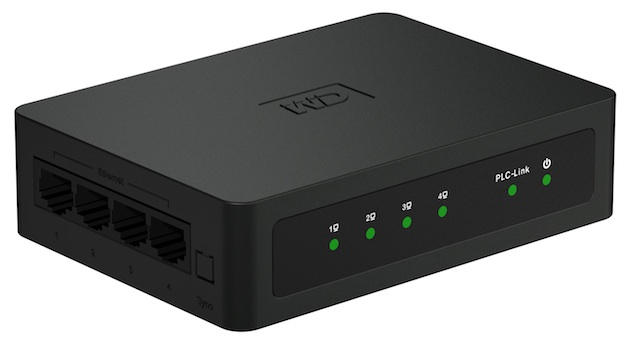
If your Time Capsule or Airport just won’t blanket your entire house with sweet, invisible WiFi, Western Digital has a new, easy to use solution to extend your network to the basement, the attic or the back yard: the Livewire Powerline AV Network Kit.
The kit includes two Livewire network adapter boxes, each with four ethernet ports. All you do is plug one Livewire adapter into your router or Time Capsule as well as a wall socket. Then plug the other adapter into a wall socket in any room in your house where you don’t have networking. As long as those two outlets are on the same power grid, which most newer homes are, your internet connection will be shot through your electrical socket to the Livewire in the other room.
A practical use for this would be to extend your network to a room that is too far away to get WiFi. For example, if you wanted to set your basement up as an office, you could just set the Livewire adapters up and plug your iMac into the second one. Easy networking, without extending your WiFi network with repeaters or wiring up the room for Ethernet.
According to Western Digital, the Livewire Powerline AV Network Kit can provide data transfer speeds of up to 200 megabits per second, which should, theoretically, be enough to stream even 1080p video. At $140 for a pair of adapters, this is a solution to consider if you’ve got any dead spots in your home network you’re feeling an itch to fill.