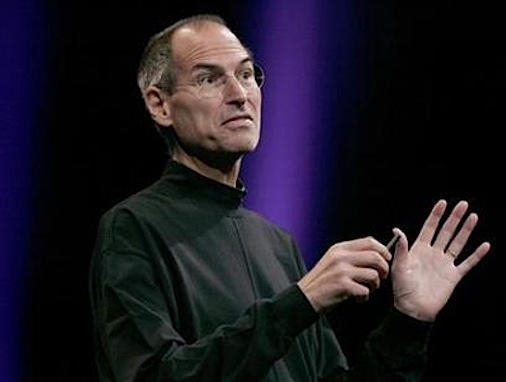
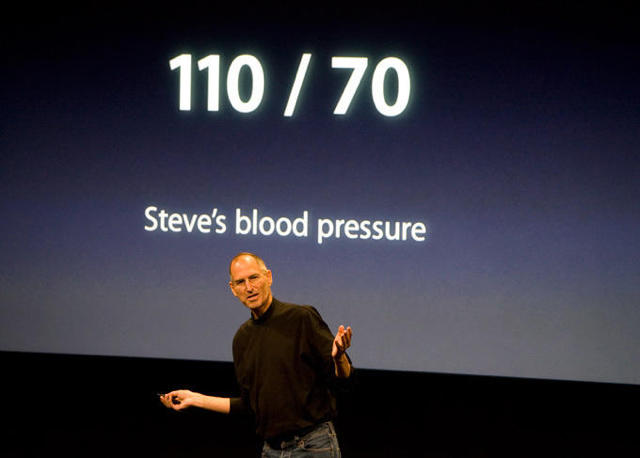
Apple CEO Steve Jobs was forced to take a six-month medical leave following an ailment “preventing his body from absorbing food,” the New York Times reported online Wednesday.
The report, citing medical experts with knowledge of Jobs’ health, told the newspaper the founder of the Cupertino, Calif.-based company was not leaving due to a reappearance of pancreatic cancer which sidelined the Jobs in 2004.
Medical experts also told the executive to reduce stress, a factor that could inflame the illness, according to the Times.
Despite concern over what the six-month absence of Steve Jobs will mean for Apple, “sales will be unaffected,” Piper Jaffray analyst Gene Munster said Wednesday.
Munster, known for his bullish outlook on Apple, told clients interim CEO Tim Cook will lead the company without a hiccup in product development.
Although Cook took temporary reins of Apple in 2004 when Jobs underwent cancer surgery, that episode lasted only one month, a fraction of the six-month absence Jobs’ announced Wednesday.
U.S. News & World Report named the “Get A Mac” campaign one of the best marketing jobs in recent times, putting it up there 13 killer campaigns including “What happens in Vegas Stays in Vegas” and “Will it Blend?”
Here’s why:
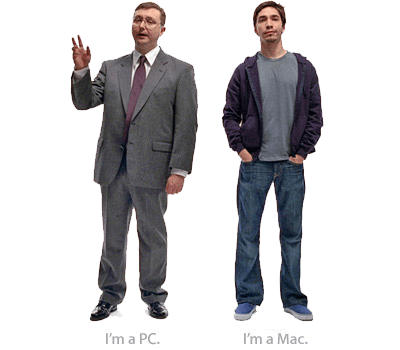
Apple’s “Get a Mac” campaign, which launched in 2006, puts the hip, easygoing Mac against the hapless, problem-prone PC. “The message of these ads is clear,” says communications professor Stephen Marshall, author of Television Advertising That Works.
“Every one of them says, ‘Don’t be this guy.’ You don’t want to be the PC.” The TV ads also appeared online, and the company released a series of web-only ads to capitalize on consumer interest in the characters. People got the message–Mac’s market share grew by 42 percent.
Lesson: Create engaging characters in your online video to help grow an audience that’s receptive to your brand.
Interesting to see some praise outside the community, since the campaign has won several awards but hasn’t always been loved by ad critics.
RBC Capital Markets Thursday downgraded Apple to ‘underperform,’ also slashing the stock’s target price to $70 from $125.
The analyst firm also told clients the percent of people who say they expect to buy a Mac or iPhone over the next three months slipped in January.
Just 28 percent of people responding to a January RBC/Changewave survey reported they would buy a Mac laptop, down from 33 percent in Nov. Likewise, 30 percent of people said they intend to purchase an iPhone, when asked in December, slipping from 34 percent in September.
Apple products are a natural for high falutin’ teen drama “Gossip Girl,” where just about everything the upper East Siders use has a recognizable brand name.
Gossip Girl, however, is sponsored by Verizon. To keep them happy, producers artfully block the Apple logos from getting into shots, but as a result Apple’s presence is almost more consipicous than it would be otherwise. The shot on the left reminds me of the trick directors use to hide pregnant actesses by placing plants and furniture to hit just mid-tummy.
A nice slide show non-Apple Apple product placement on Gossip Girl at Geek Sugar settles an ongoing argument I’ve been having with a friend over whether Dan’s laptop is a Mac or not…
Funnyman Jim Carrey keeps his love alive with wife, former playmate and comedian Jenny McCarthy, by dancing for her on iChat.
McCarthy tells OK magazine (with much enthusiasm!) that she and her Yes Man text and use iChat to keep in touch while he’s on the set.
Jenny says she and Jim also use a web cam from time to time.
“I haven’t done any dancing, but I make him do that!” she says. “It’s nice! With the iChat, we’re always afraid that there’s a third party watching! We’re a little bit careful, but it’s a great way to have that face connection!”
She also confesses that between the two of them there’s not much ha ha-ing around the house. Somehow I find that hard to believe, especially if he’s shaking his groove thing for her regularly.
So here’s another fantasy Mac design from Sait Alanyli, the guy who did the [L-shaped Mac mini](https://cultofmac.com/l-shaped-mac-mini-might-be-shape-of-things-to-come/5523) concept that we featured here back in December.
This is the Mac Tower, and I have to confess there are some things about it that I find rather appealing. The ideas of a pop-up casing and a pop-up remote are very cute, and the thought of putting a battery inside with enough juice to power a Time Machine backup in case of sudden mains power loss is, well, one of those things you wonder no-one has done before.
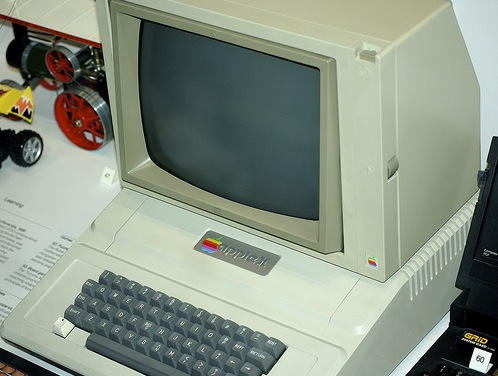
Now, I know what you’re thinking: There’s an Apple II conference? And they do it *every year*?
Yup. There is. And they do. And they have been for the last 19 years. They call it KansasFest.
Come this July (21st – 26th), it will be 20 years, and the organizers are celebrating the anniversary with some special speakers and, they hope, lots and lots and LOTS of Apple IIs and associated stuff.
Steve Jobs' health is a topic of concern for the Apple community -- and for Wall Street. Photo: Apple
Apple CEO Steve Jobs announced he will take a medical leave of absence until June in an email letter sent Wednesday to all Apple employees.
Citing continued distractions stemming from curiosity over his personal health that have affected him, his family and “everyone else at Apple,” Jobs admitted his health issues are “more complex than [he] originally thought” and has asked Tim Cook, Apple’s Chief Operating Officer, to be responsible for Apple’s day to day operations until Jobs’ intended return to the company in June.
Jobs said that he plans to remain involved in major strategic decisions while he is away and said the company’s board of directors fully supports this plan.
A handful of Web browsers for the iPhone have silently appeared at the App Store, a seeming reversal of Apple’s policy to block sales of applications that competed with the cell phone’s built-in Safari.
The four applications — Edge Browser, Webmate, Incognito and Shaking Web — employ Apple’s Webkit framework, the software used to build Safari.
Apple’s apparent thaw in its refusal to add some applications to the App Store doesn’t seem to extend to heavy-weight Safari rivals Firefox and Opera. Cupertino maintains projects relying on non-Apple software development techniques,cannot be sold via the App Store.
Harvard’s Nieman Journalism Lab has an interesting series on changing journalism, both in terms of what the digital backpack journalist uses and how they use it.
NBC news journalist Mara Schiavocampo opened up her 30-pound reporter’s backpack (a custom job with wheels) for them in a two-part interview about her work.
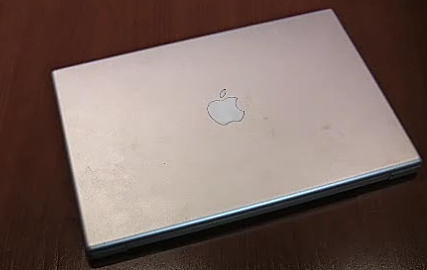
In addition to the newsroom standard issue Sony HVR-V1U HDV camcorder and a bunch of other expensive stuff, she uses an Apple MacBook Pro (in the image above), edits with Final Cut Pro and totes an extra MacBook battery for staying power.
Apple has begun approving the first wave of browser products to compete with Mobile Safari on the iPhone and iPod Touch, signaling the company may not be the great curmudgeon of handheld computing after all.
The apparent shift in Apple’s previous policy of denying AppStore certification to software products that “duplicate the functionality” of its own applications that ship with the devices, a handful of browser apps have begun showing up in recent days on the iTunes store.
Incognito, from developer Dan Park, promises completely anonymous browsing, with all history cleared simply by closing the application.
Edge Browser is a free app that opens up valuable screen real estate, but forces the address and navigation tools into the Settings menu, which doesn’t seem too promising a design feature to me.
WebMate is a 99¢ solution to tabbed browsing on the iPhone, that works by queuing up all the links you click on, then allowing you to view them one by one when you’re ready.
Could Apple be readying a 4GB iPhone during the first quarter?
An analyst Wednesday told clients he expects a new 4GB iPhone during the first quarter, pushing sales of the popular handset to 7 million units beyond the 6.9 million iPhone 3Gs sold in 2008.
“Checks indicate a new 4GB iPhone which may be helping to increase build rates,” UBS analyst Maynard Um advised. Taiwan-based chipmakers may be preparing parts for a new iPhone, a newspaper reported Tuesday.
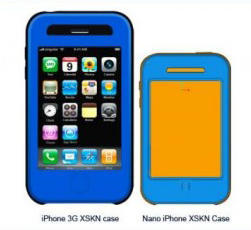
Unconfirmed speculation of an iPhone nano priced below the $199 8GB iPhone has swirled for some time.
JPMorgan analyst Mark Moskowitz became the latest on Wall Street to trim expectations for Apple during the fiscal year. Moskowitz Wednesday lowered slightly his guidance for Apple shares to $102 from $104.
Earlier this week, Citi’s Richard Gardner reduced his target price for Apple stock to $132 from $153, citing the need to “reflect a more conservative view of consumer spending.”
Moskowitz, however, told clients Apple’s value is “holding up better than feared” despite lower demand for PCs and other high tech gadgets.
Ian Betteridge is a brave man. Not only is he a Mac user who has switched to Ubuntu running on Dell hardware, he’s also decided to say so in public.
Some of you may recognize his name: for some years, he was a writer for, and then editor of, the UK version of MacUser magazine.
Why did he do it? Partly because of price, partly because he cares about open software running on open platforms. Apple, he says, is a long way from open and seems to be closing things ever tighter as time goes on. (See also his follow-up post detailing the apps he’s chosen to use on Linux.)
What really caught my eye, though, was one of Ian’s asides. Half way through his post, he predicts that “sooner or later”, the “development ecosystem will increasingly come to resemble that of the iPhone, and for much the same reasons”.
In other words, there will be an App Store for OS X software. An App Store that Apple will keep just as tight control over. Only apps that met with Apple’s approval would be cleared for distribution, and only apps distributed in that manner would actually run.
A bold prediction indeed. A fair one, though? And does the Better World of free software tempt you to switch to Ubuntu (or any other *nix variant)? What do you think?
(Disclaimers: I sometimes contribute articles to MacUser UK; and I know Ian Betteridge personally, have enjoyed a chat and a pint with him, and consider him a lovely chap.)
“Music of the Night” – she plays through the nose!
Smule, developers of the hit iPhone music app Ocarina, announced the winners of the company’s “This Contest Blows” Ocarina video contest Tuesday. Conceived as a way to reward its raving Ocarina fans with $1,000 per winner, the contest attracted a number of surprising and creative videos. Many contestants demonstrated musical talent, as well as Smulean je ne sais quoi.
Because the contest’s intent was to nurture budding Ocarina talent, Smule is extending the contest to Friday, February 13, and will announce 5 more $1,000 prize winners on Smule’s Mule live broadcast February 16th.
Check out a couple of our favorite winners here, plus more after the jump.
Apple sweetened the pot a bit on its new productivity suite Tuesday, with a “Try it Free for 30 days” offer on iWork ’09. The enhanced spreadsheet, desktop publishing and presentation software package must not be flying off the shelves since its introduction last week at Macworld.
I was aiming to get around to it at some point because I’ve come to really like Pages, especially since I got used to its decidedly-different-than-Word workflow.
I’m also interested in checking out Numbers, Apple’s spreadsheet software that was not part of the copy of iWork ’06 I’ve been hobbling along with. I hope not to be involved again too soon in any venture that requires a lot of work with spreadsheets, but if Numbers is a reasonably robust solution it will be nice to know it’s in the file system.
Of course – and I hate to keep going on about this – Keynote is, to me, the star of the iWork show, a truly full-featured, sophisticated piece of presentation software that puts Powerpoint to shame. I’m looking forward to playing with its new bells and whistles and this little free teaser may be just the thing to get me off my duff to check it out.
Psystar has raised another desperate, if novel claim in its ongoing legal battle with Apple, arguing before a federal judge that since the Mac clone-maker legally purchased its copies of Mac OS X from Apple and resellers, it has the right to do basically whatever it wants with that software under the first-sale doctrine.
In court filings described by Computerworld, Psystar told the court: “Once a copyright owner consents to the sale of particular copies of a work, the owner may not thereafter exercise distribution rights with respect to those copies. See, e.g., Bobbs-Merrill Co. v. Straus, 210 U.S. 339, 350-51 (1908) (recognizing more than 100 years ago the concept of first sale and the limitations imposed upon a copyright owner in light thereof). Psystar acquired lawful copies of the Mac OS from Apple; those copies were lawfully acquired from authorized distributors including some directly from Apple; Psystar paid good and valuable consideration for those copies; Psystar disposed of those lawfully acquired copies to third-parties.”
Unfortunately for Psystar, courts have rarely held the first sale doctrine applies to software, considering it a product that is licensed, not sold, and can therefore be distributed with restrictions on further distribution. Psystar’s thin hopes likely hang on the precedent of a case involving Adobe, in which a court upheld the first sale doctrine’s application to software.
The Juice Wireless iPhone and iPod Touch app Mirror deserves some credit, we suppose, for putting a big bold **DISCLAIMER** right at the top of its description page on the AppStore, calling the application a “fun, joke…for your amusement only.”
99¢ buys you a selection of 9 frames which can be used to border the reflective glossy surface of the models released in 2008, giving the impression you’re holding a mirror instead of a mobile computing device. The developers say they’ve brought you this hilarious bit of software engineering and design so “you’ll never look stupid staring at your iPhone again.” Um, OK.
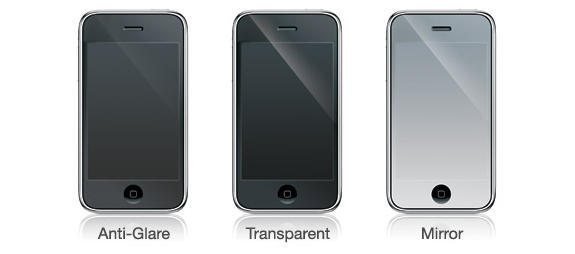
If you’re really interested in turning your iPhone or iPod Touch into a mirror, you may want to look into the benefits of a protective mylar screen cover from RadTech.
ClearCal is an ultra thin (5 mil) tension adhering screen cover available in Anti-Glare, Transparent and Mirror surface finishes. Its high quality adhesive stays on the film – which can be removed, cleaned and reapplied several times – magically leaving no residue on your device.
Two sets of protective films are included per pack, priced at $9.95 for the transparent version and $12.95 for the other two. The mirror version gives a clear, fully reflective appearance when the device display is off, turning it into a trés chic silver brick. When the display comes on the mirrored appearance fades away and the cover becomes completely transparent; it’s a very cool effect.
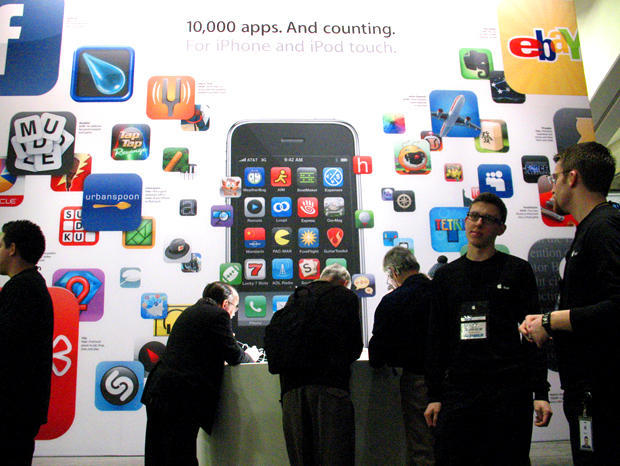
OK, the AppStore has over 10,000 apps for iPhone and iPod Touch. It’s a nice round number, impressive even. But it’s kind of like saying there are over 10,000 medicinal plants in the rainforests of the Amazon.
That’s great, but how do I find them and which ones are good for me?
I’m not paid enough, nor am I interested in wading through all 10,000 iPhone apps to cull pearls from the sea of fart and ringtone gems on offer, but I am happy to pass on a bit of wisdom published by the editors of Mashable, who’ve gone to the trouble of picking out 70+ free social media apps. Since the iPhone is essentially a mobile communication device, it seems to me social media is at least a good place to start.
Follow me after the jump for my picks of the best from Mashable’s list.
Apple could control up to 40 percent of the smartphone market by 2013, UK-based Generator Research announced Tuesday. The company predicted the iPhone would grab marketshare at a time when Nokia and other cell phone players are battered by poor economic conditions.
Nokia, the current cell phone leader, could shrink to just 20 percent of the market, contends the research firm. The prediction is counter to Nokia’s own outlook. Earlier this month, Nokia CEO Olli-Pekka Kallasvuo told the Financial Times the economic mess could hurt rivals and help the Finnish company known for low-cost phones.
Not to be deterred, the British researchers said Apple could parlay the combination iPhone and App Store into another iPod-iTunes success.
Safari users are being advised to avoid the Apple-made browser’s built-in RSS reader, according to reports Tuesday. A security vulnerability in both Mac and Windows versions of Safari could allow hackers to snoop through the contents of computer hard-drives.
Although Apple reportedly knows about the software problem, the Cupertino, Calif.-based company has remained silent on when or if it will release a fix.
For Mac users, the security flaw targets Mac OS X Leopard, according to Brian Mastenbrook, a developer who first spotted the glitch. An alternate Mac RSS reader can be selected via Safari’s Preferences menu.
Windows users can switch to Firefox or another alternative to Safari, reports suggested.