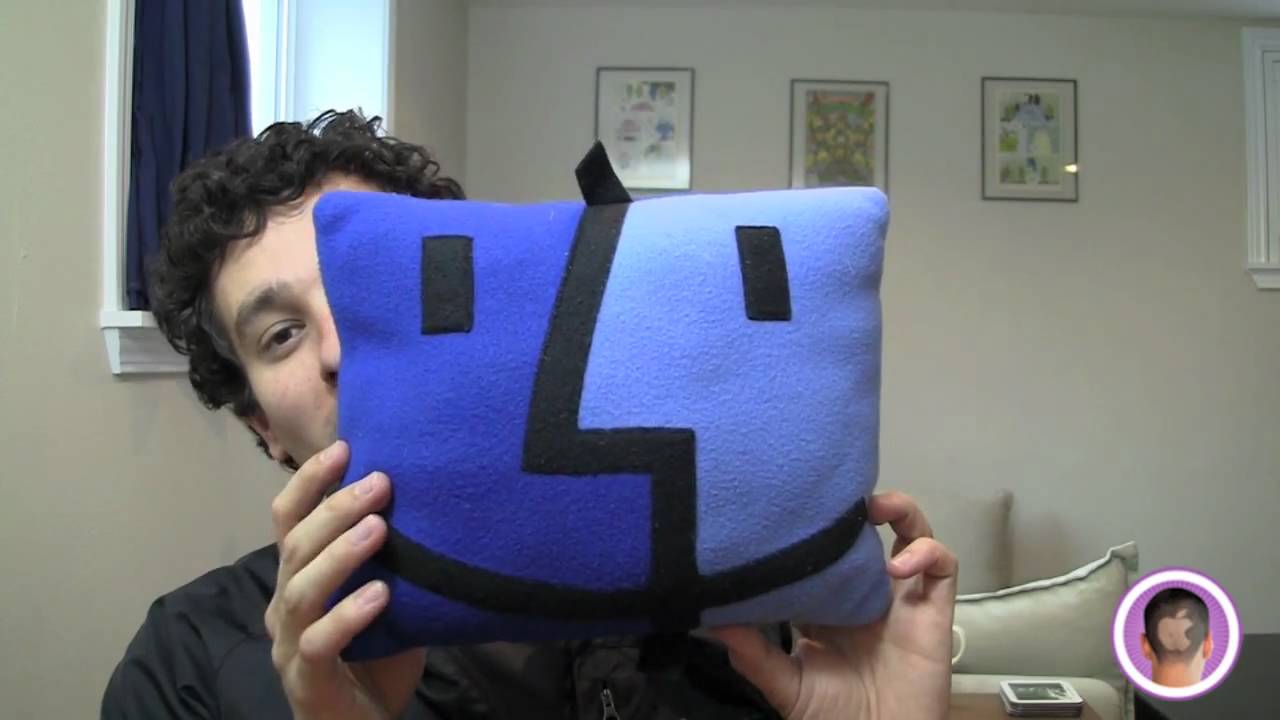
If you’re an Apple fan (and if you’re reading this, it’s probably safe to assume you are), you’ve probably heard of these neat pillows from Throwboy.com. Throwboy makes a whole slew of cool Apple and geek inspired throw pillows. I love’em, and thought I’d be a nice guy and score some for you, our beloved Cult of Mac viewers and readers.
If you’d like to qualify to win one of these super stuffed plushes, good news, it’s super easy! Here’s how to get yourself in the running:
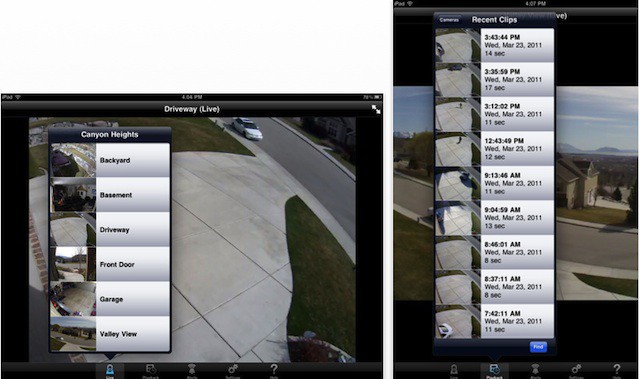
Doubtless because creeps look indistinguishable from the pizza delivery guy on the iPhone’s tiny, standard-def screen, Logitech yesterday released an HD, iPad-version of their remote CCTV app, Logitech Alert. The app allows the user to monitor hi-def feeds, complete with “rich audio,” from an installed Logitech Alert CCTV camera system over the Internet.
While the app is free, the hardware starts at $300, and lets you observe a live feed from your iPad or iPhone; you can also view footage recorded onto your computer’s HD directly. An extra $80/year will net you the full Monte, allowing remote review (with an iDevice) of recorded footage from your computer’s HD.
The App’s page states “please use Wi-Fi for the best video and audio performance and experience,” which we’re assuming means the service will function over 3G, albeit most likely with hobbled performance.
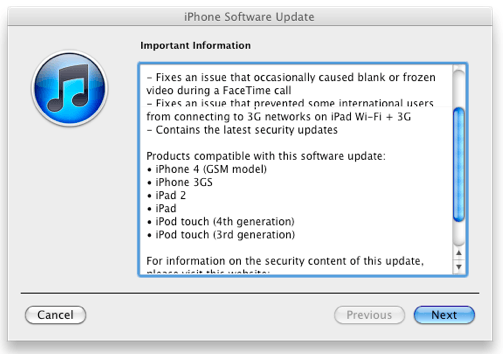
Apple has just released iOS 4.3.2 – an update for all devices that support the 4.3 software – except the Verizon iPhone 4 (CDMA) – which fixes a FaceTime bug and an issue that prevents some international users from connecting to 3G networks on the iPad.
The release notes read:
– Fixes an issue that occasionally caused blank or frozen video during a FaceTime call
– Fixes an issue that prevented some international users from connecting to 3G networks on iPad Wi-Fi + 3G
– Contains the latest security updates
As usual with an iOS update, jailbreakers should avoid updating their devices, especially if they rely on an unlock. Dev-Team member MuscleNerd has warned hackers with messages on Twitter, confirming that Apple is working hard to prevent untethered jailbreaks:
ultrasn0w unlockers stay away from today’s iOS 4.3.2!
Apple sure is aggresively patching these untethered jailbreaks lately (but that’s better than lawsuits)
The iOS 4.3.2 update is now available to download via iTunes. Verizon users get the same bug fixes, but they come in the form of iOS 4.2.7 – also immediately available.
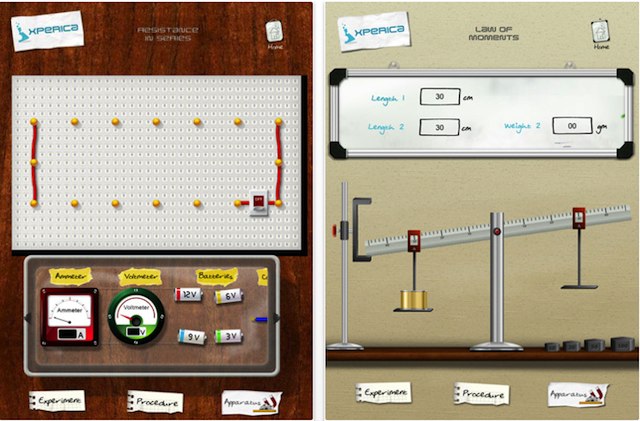
Seriously: Imagine your kids being able to play around with all the wonders of physics — without the fear they might slice off a finger (or two), or burn their eyebrows off.
That’s the basic idea behind the brilliant Xperica HD for the iPad, a physics sandbox that lets high-school kids (or anyone, really) make sense of physics through playing with interactive experiments. The first four modules are free, with $4 netting the remaining half-dozen set of physics experiments.
While the first set is all about physics, the developer told us they’ll soon have experiment sets in other spheres of science (like chemistry) available soon, with some modules in each sphere being released for free — and that they might make all the modules free at some point (which might make one hesitant to buy the extra modules, we think, but there ya go).
We start the day with three hardware bargains. First up is a deal on either a MacBook or a MacBook Pro, starting out at $500. Next is an 8GB previous-generation iPod nano for $99. Finally, the spotlight focuses on a 30GB iPod video device at $115.
Along the way, we also take a look at several iPad accessories, as well as rechargers for your iPhone. As usual, details on these and many other items can be found at CoM’s “Daily Deals” page right after the jump.
After a recent photo essay showed a bunch of Italian lawmakers whiling away the hours in parliament by playing games on iPads, you might think they would become more discreet about using them. (Like the rest of us who have that fake spreadsheet at the ready should anyone interrupt our surreptitious gaming or shopping at work.)
Not so. Instead, it seems that it has become quite the fashion trend to flaunt your iPad in parliament.
Imagine building a fast car and only being able to initially drive it on a crowded city street. That is sort of the position Apple is in with its iPad 2, according to one Wall Street expert. Demand (horsepower) far exceeds supply (the crowded street). Which is why Apple stock – despite being likely to meet the Street’s consensus – still has room to grow.
“The takeaway likely will be that iPad was supply-constrained and has an open growth opportunity in calendar 2011 and calendar 2012,” Piper Jaffray’s Gene Munster told investors Thursday.
If you purchased a MacBook Pro between 2007 and 2008, you’re probably aware that Apple had more than a little bit of trouble with the NVIDIA GeForce 8600M GTs they used to build the Pros that generation. In fact, Apple’s been repairing MacBook Pros for customers for free since October of 2008 if they experience blank screens or image distortion issues related to the faulty GPUs.
A new report by Mobile Magazine suggests, though, that the tool Apple has been using to determine whether or not a defective 8600M GT is responsible for rendering your MBP unusable is in itself faulty, and may have resulted in several false positives for logic board and not GPU issues.
The problem? Apple’s fixing 2007 and 2008 MacBook Pros with GPU issues for free. Logic board replacements, on the other hand, usually cost more than a grand.
When I first bought my iPad 2, I did so for one particularly sordid use. Coming home, I drew the blinds, closed the bedroom door and turned my iPad on with a moan of anticipation. When my girlfriend came home from work unexpectedly an hour later, she discovered me in the dark — startled but defiant — smearing goo all over my tablet.
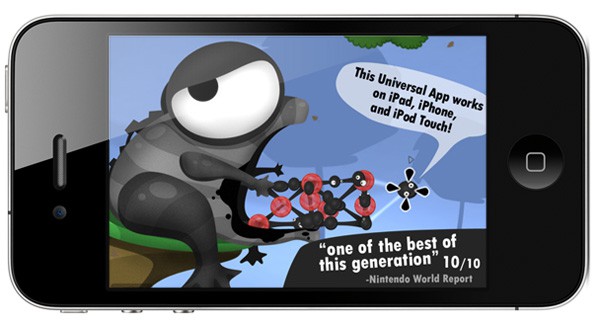
I speak, of course, about 2D Boy’s multi-platform, physics puzzler sensation, World of Goo. It’s one of the best games on the iPad, selling over 125,000 copies in its first month on the App Store alone. And now? World of Goo HD has gotten a universal update, allowing owners of the iPhone 4, iPhone 3GS and last two generations of the iPod Touch to enjoy their own sordid goo-smearing session.
If you already own World of Goo HD on iPad, the universal update is free. If you only want to play the game on your iPhone, though, you can purchase the handheld version sans the HD for just $0.99. Trust me, that price makes World of Goo the best value on the App Store, bar none.
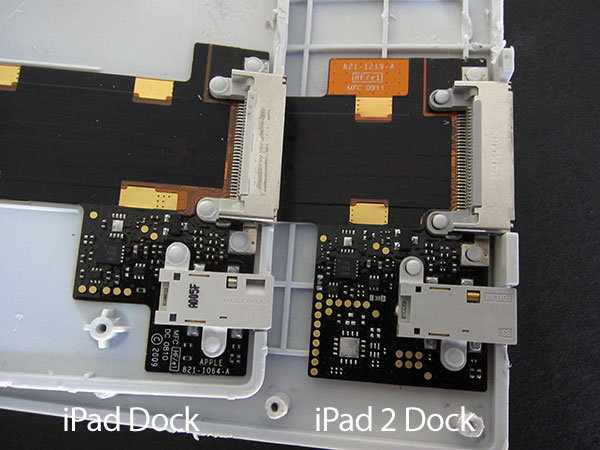
The guys over at iLounge wanted to figure out why Apple had decided to so radically change the design of the iPad dock between the first and second generation of the device, so they decided to tear that sucker open and see what they could find.
Their conclusion? The iPad dock was made bigger and heavier to provide a more stable base, which is obvious enough. But I was more interested by their takeaway:
The biggest takeaway from the experience? Case incompatibilities aside—and they increasingly seem to be by design—Apple builds these docks amazingly well. Given that we’re talking about $29 accessories that look like they’re made entirely from plastic, they were surprisingly challenging to disassemble, resilient to all but surface damage, and unusually substantial for items that could have just as easily been rendered disposable. The industrial engineers only cut obvious corners on the sequel in ways that would never impact an average user, replacing internal screws and glue with more efficient fasteners. They obviously also created a dock that uses substantially more metal than before while maintaining the same $29 price. It’s actually pretty impressive.
Of course, that’s the difference between Apple and other electronics makers in a nutshell: a commitment to quality in even the most superfluous accessory. The iPad Dock could have just been a piece of molded plastic with a USB passthrough cable, but it’s not.
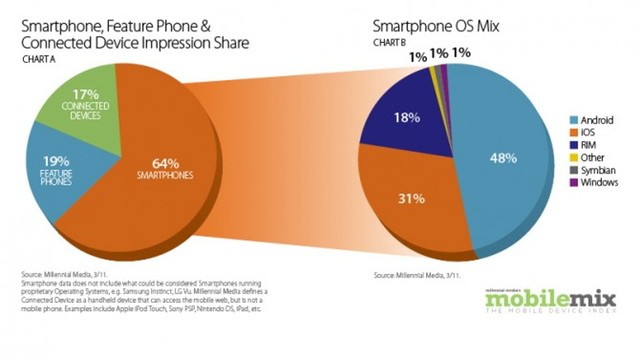
What did the addition of Verizon Wireless mean for the iPhone’s battle against Android? The extra U.S. carrier resulted in an 8.2 percent bump, eroding the multi-carrier open source platform’s lead over Apple, according to a new survey. Android’s share of impressions fell to 48 percent in March, while iOS rose to 31 percent, up from 27 percent. That’s the word from the latest Mobile Mix report by Millennial Media, an independent mobile network.
Although 14 of the top 20 mobile devices use Android, Apple’s iOS still leads in applications, with nearly half of the applications written for the Cupertino, Calif. company’s device.
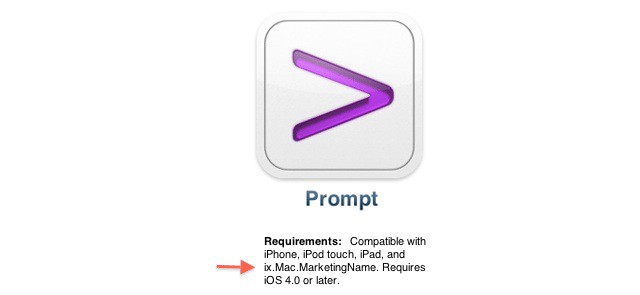
Late last night, the iOS App Store experienced a wide scale bug that affected the listings of hundreds of apps. Under the app’s “Requirements” listing, a new product became listed as possibly compatible with iOS apps after iPhone, iPod Touch and iPad: “ix.Mac.MarketingName.”
What does it mean? Possibly and even probably nothing, but the “Mac” designation in the string implies a Mac that can run iOS apps.
Uninstalling software under Mac OS X is generally a straightforward procedure — just delete the program from the Applications folder. Few vendors offer uninstallers on the Mac, and generally they’re not necessary. Most programs don’t run background components or alter system settings files (like the Registry on Windows), and leaving old preferences and support files on the hard drive generally doesn’t do much harm.
But if you are trying to remove an old or corrupt component, reinstall software to change a serial number, or just free up disk space, removing all components of the old application can be important. These components include the application itself, preferences and support items, and sometimes hidden files or kernel extensions. Anyone who’s had problems installing an Adobe CS application or removing Symantec AntiVirus will appreciate how hard it can be to fully remove old software.
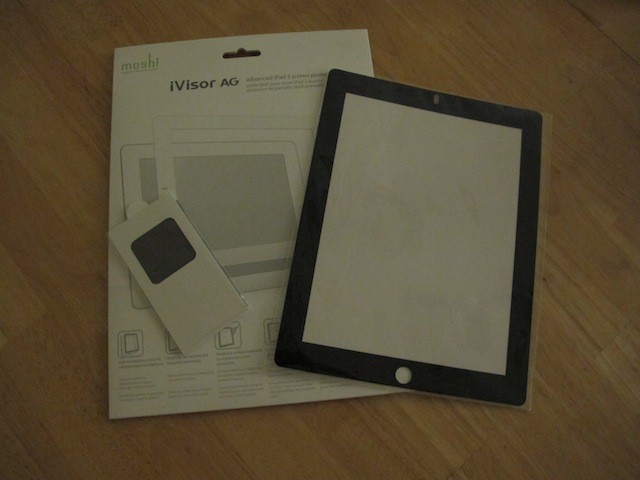
As far as I’m concerned bubbles don’t have a place on my iPad 2 screen. So I’m pretty picky when it comes to placing a screen protector over huge display on my iPad. It seems that no matter what you do you’ll always end up with a bubble or two after applying a screen protector unless you are a professional installer. The Moshi iVisor AG is different. Moshi guarantees a bubble-free installation. It actually works because this screen protector is a lot different from others I’ve encountered before.
The Moshi iVisor AG adheres to the screen differently from other similar products. It only sticks to the edges of the iPad’s screen and that edge is either solid black or solid white to match the appropriate frame on an iPad 2. The adhesive is on the back side of that frame. This makes the iVisor AG a lot easier to install and remove. Once applied it acts like a bubble over the top of the display, but not a distracting one like other protective covers.
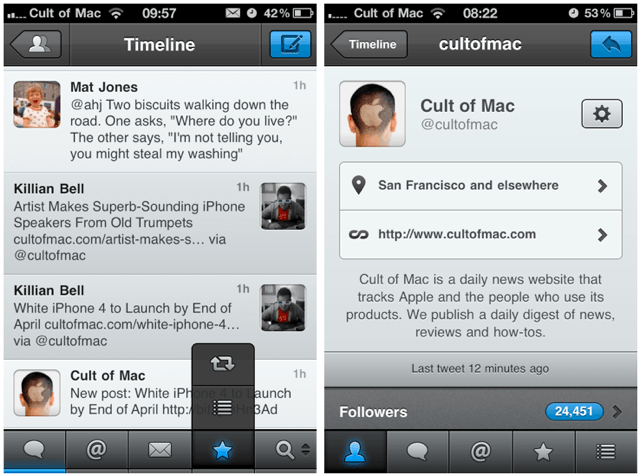
One of the most anticipated Twitter clients for the iPhone finally hit the App Store yesterday, and I was staggered by the attention it received within its first few hours – I can’t remember the last time an iOS application launched with that kind exposure – especially not a Twitter client.
From Tapbots – the creators of Convertbot, Pastebot and Weightbot – Tweetbot promises to be a full-featured Twitter client with a lot of personality; boasting a meticulously crafted user interface, smart gestures, and customizable navigation.
Tweetbot’s launch is big news today – it’s all over Twitter and many publications are dubbing the application a Twitter for iPhone killer. But is it as good as the release day hype would have you believe? Find out in our review after the break!
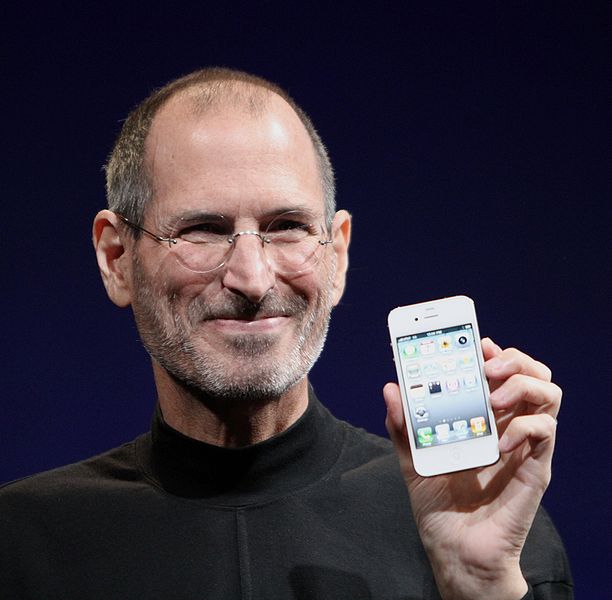
Following a long 10-month delay, the wait for Apple’s white iPhone 4 could soon be over, according to three people with knowledge of the company’s plans. The device will be available through both AT&T and Verizon Wireless and will launch by the end of April.
A Bloomberg report on Wednesday cites three people who are familiar with Apple’s plans, while another report published on Thursday by Reuters cites two more who also claim the white iPhone 4 is currently in production.
A bout of manufacturing challenges have delayed the device – which is rumored to have included paint that becomes discolored and peels under heat, light leakage into the camera, and light leakage out of the case – the device that many thought would never see the light of day could finally be released from the Foxconn factory.
Despite a message on Twitter last month from Apple’s vice president Phil Schiller, confirming the white device would be available this spring, the recent removal of any image depicting the device from Apple’s website fuelled rumors that the handset would not be launching.
The latest beta version of Safari now features a do-not-track privacy setting to prevent online advertisers from tracking users as they surf the Web.
The tool has been added to the latest version of Safari in Lion, the upcoming update to OS X expected to go public this summer.
Safari is the third major browser to add a do-not-track setting. It joins Microsoft’s Internet Explorer and Mozilla’s Firefox include it, but Google’s Chrome does not — yet.
Google, of course, is one of the web’s biggest online advertisers. It’s also worth noting that Apple offers an in-app advertising program called iAds that competes with other forms of advertising, online and off.
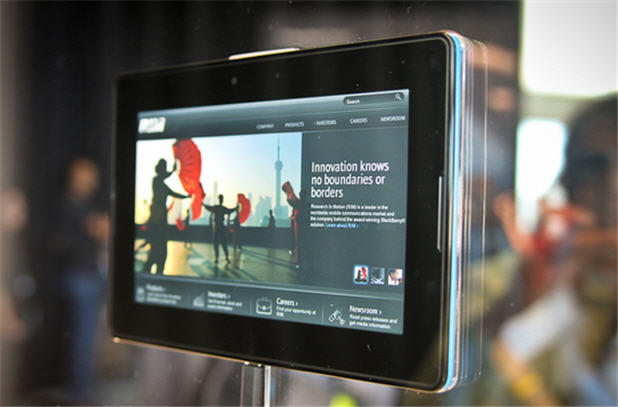
Oh dear. RIM’s iPad competitor, the PlayBook, gets a solid panning from the New York Times’ David Pogue.
The main problem is the lack of apps. Not even native apps. It doesn’t even have built-in email! The hardware is pretty limited too — no 3G or GPS.
The PlayBook, then, is convenient, fast and coherently designed. But in its current half-baked form, it seems almost silly to try to assess it, let alone buy it.
Remember, the primary competition is an iPad — the same price, but much thinner, much bigger screen and a library of 300,000 apps. In that light, does it make sense to buy a fledgling tablet with no built-in e-mail or calendar, no cellular connection, no videochat, no Skype, no Notes app, no GPS app, no videochat, no Pandora radio and no Angry Birds?
On the bright side, it does have a couple of spectacular features: its secure, can be synced wirelessly, and can power an external screen independently (the iPad only does mirroring). RIM promises updates to the hardware and software throughout the year, but by then, Apple will be finishing the iPad 3. It looks like a bomb.
UPDATE: WSJ’s Walt Mossberg slams it too: “I recommend waiting on the PlayBook until more independently usable versions with the promised additions are available.”
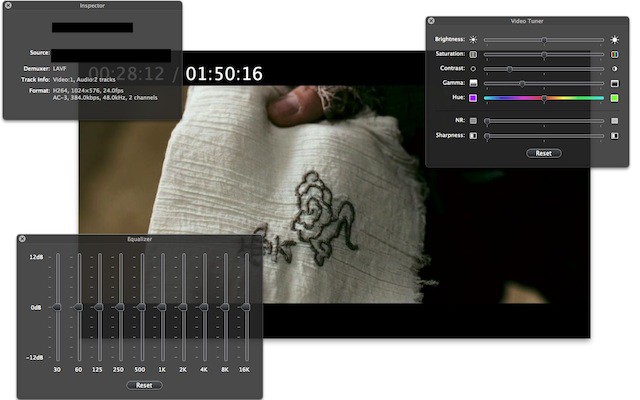
If you haven’t downloaded free MPlayerX yet, do it now. The newish player (it;s been around for just over a year) is the perfect balance between simplicity and performance. It’s the player QuickTime should have been — it’s simple, it’s pretty and it plays absolutely anything you throw at it. It has features like multitouch control via a trackpad that allows you to not only jog control — in a way that makes QuickTime seem awkward and clumsy — but also control volume. Here’s a full list of features from the app’s Mac App Store page:
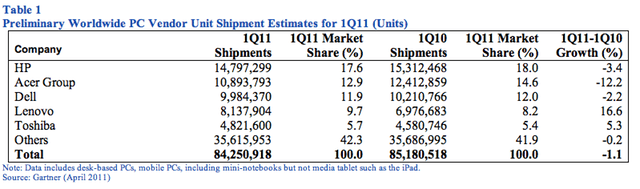
Researchers at Gartner did everything but point at Steve Jobs as the reason for a decline in demand for PCs. “With the launch of the iPad 2 in February, more consumers either switched to buying an alternative device, or simply held back from buying PCs,” one expert announced Wednesday afternoon.
Worldwide demand for PCs during the first quarter of 2011 fell 1.1 percent to 84.3 million units, figures Gartner said “indicate potential sluggishness, not just a normal seasonal slowdown.”
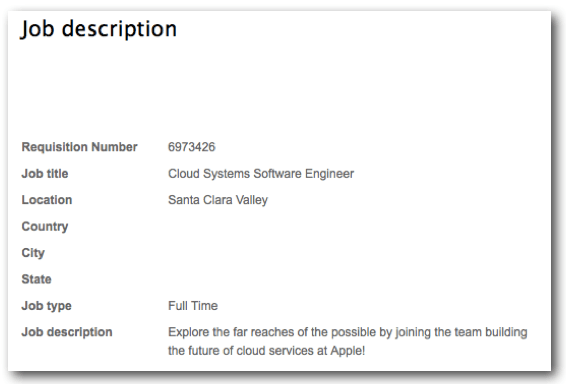
An Apple cloud service has been one of the main focal points for a lot of recent speculation, and a new job listing on the Apple website confirms that the company is currently putting together a crack team of people to build “the future of cloud services at Apple.”
The listing is for a “Cloud Systems Software Engineer” – a full-time role in a “small team” based at the company’s main Cupertino campus. In true Apple style the listing doesn’t reveal a lot of information about this cloud service, however, it does state that the team will be responsible for writing software “which forms the foundation” for some of Apple’s “most exciting new products and services.”
Apple’s only attempt at cloud services so far has been MobileMe, which has left a great deal to be desired for many of its users. Recent rumors claimed that a revamped MobileMe service would soon go live, featuring a digital storage function similar to iDisk which would enable users to store content that could be streamed to iOS devices.
Since Apple has only just started advertising for people to build their new team, it doesn’t look like the cloud service will be launching anytime in the immediate future. It is believed cloud services will be a big part of iOS 5, so the first we hear about it could be at WWDC in June.
Interestingly, since this job listing became famous, it seems to have been removed by Apple.
Steve Jobs isn’t exactly the kind of guy to let a grudge go. That’s why when Google released Android and it featured a “pinch to zoom” feature just like iOS, Jobs decided to make sure that Apple board member and Google CEO Eric Schmidt couldn’t steal any of Cupertino’s other bright ideas… like the original iPad.
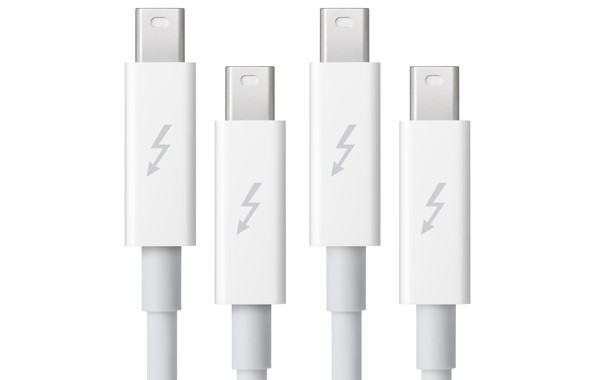
The lightning-fast Thunderbolt standard might be confined to 2011 MacBook Pros for now without a lot of accessories to boast of, but just you wait: Intel has announced that they are releasing Thunderbolt development kits that will finally enable every Joe and Jane Manufacturer to make some devices that can capitalize upon the standard’s 10Gbps bi-directional data transfer capabilities.
So here’s the question. Obviously we can expect to see a host of new gadgets soon boasting a Thunderbolt port, including the usual gaggle of hard drives and Blu-Ray drives and printers. When they come, though, will any products eschew USB 3.0 for ThunderBolt entirely, though?
If so, or if not, who will win the upcoming battle between the USB 3.0 and ThunderBolt standards? Let’s just hope Thunderbolt’s not another Firewire.
We start off the day with two MacBook Pro laptops and an iPad. First up is a Core 2 Duo 2.4GHz MacBook Pro with a 13″ screen for $1,049 from Expercom. Next is a MacBook Pro with a 2.8GHz chip and a 15″ screen for $1,439 from the Apple Store. Finally, we have a 16GB Wi-Fi iPad for $349 from the Apple Store.
Along the way, we check out a blast from the past – a 1.33GHz iBook G4 for $215. There is a leather case for your iPad, as well as several software packages – including Microsoft Office 2011 for the Mac. As always, details on these and many other items can be found at CoM’s “Daily Deals” page right after the jump.