


Today’s deals lead-off with hardware. Imacs starting at $99. MacBook Air laptops starting at $1,099 and MacBook Pro Core 2s for $1,898 – plus much more.
Details on these and other great deals can be found on the CoM Daily Deals page.

Today’s deals lead-off with hardware. Imacs starting at $99. MacBook Air laptops starting at $1,099 and MacBook Pro Core 2s for $1,898 – plus much more.
Details on these and other great deals can be found on the CoM Daily Deals page.
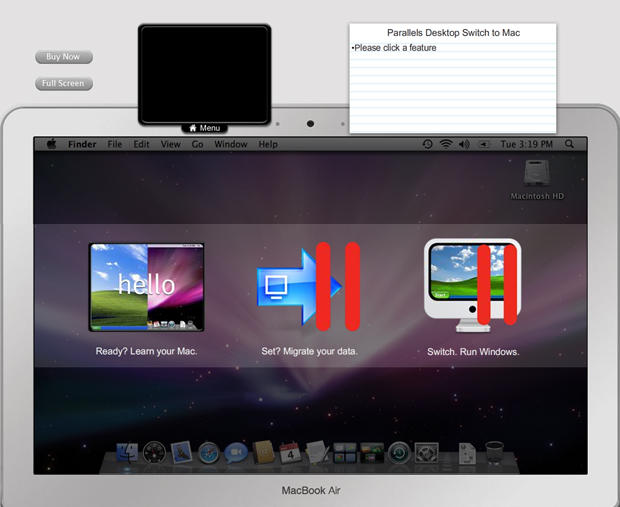
Parallels, regarded by many as the premier virtual Windows solution for the Mac, announced Tuesday a special Switch to Mac Edition, extending a welcome lifeline to computer users who are choosing to embrace the elegance, power and simplicity of Apple’s Mac OS in increasing numbers every day.
Cult of Mac received an extensive tour of the new “Switch to Mac” features recently and it’s a good bet Parallels will deliver on its promise to have former Windows users working comfortably in the Mac UI within hours instead of the more usual learning curve that can often take weeks.
“For years I have worked with switchers coming into Apple stores with questions about how to use their new Mac,” says Saied Ghaffari, Switch to Mac Advocate, who gave us the tutorial demo.
“Parallels Desktop Switch to Mac Edition thoroughly addresses the concerns switchers have,” Ghaffari said, adding, “the product is designed to make moving to Mac as fast and simple as possible, regardless of the level of technical knowledge of the switcher.
Featuring a set of easy-to-use tools and interactive tutorials such as Click to Learn, Watch Saied, and You Try incorporated with Parallels Desktop 4.0 for Mac, the Switch to Mac edition promises to help “Switchers” understand how to operate Mac OS X, transfer all PC data and applications, and seamlessly run their Windows applications on their new Macs.
“It’s like a friend teaching you the Mac at your own pace,” according to Ghaffari.
Parallels Desktop 4.0 Switch to Mac Edition is available from today at Apple stores, at Apple.com and through other preferred retail partners in English, German and French. The suggested retail price (SRP) of the product is $99.99.
Hit the jump for more information and detailed explanation of the Switch to Mac edition’s features.
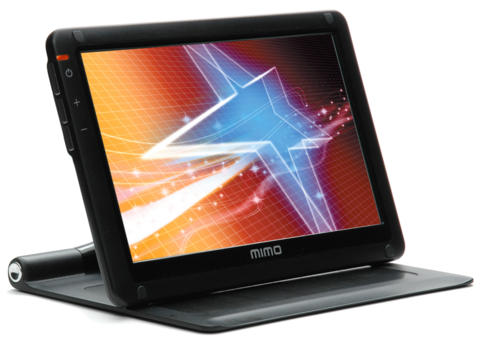
If you want the feel of a touchscreen monitor for your MacBook but don’t want to wait until Apple unveils its rumored tablet, Mimo Monitors may have an alternative: a 7-inch display with resistive touchscreen for USB 2.0 Intel Macs.
The Mimo 720-S has all of the features of the Mimo 710-S plus a touchscreen. The screen provides 800×400 resolution and is on a 90-degree pivot. The device weighs less than 1 pound.
The monitor also offers an integrated stand and cover. The Mimo 720-S is $229.99 and requires USB 2.0. Mac users must download Mac OS X drivers.
[Via Mimo]

Apple has tapped the comic genius of actor Patrick Warburton for its latest “Get A Mac” TV ad. But despite a very promising start — you smile just seeing him – the ad is a dud.
Warburton is best known for playing Elaine’s boyfriend, David Puddy, on Seinfeld. The man is just funny, period. Unfortunately, Apple’s new “Top of the Line” ad is not. (Watch it below).
Warburton plays a top-of-the-line PC — a fast, smooth machine with a big screen.
The computer shopper — a young woman — is initially impressed, but is turned off when he admits he’s not immune to viruses and other headaches. The silly fool forsakes Warburton’s charms for the unbearable Justin Long, who plays the Mac.
The ad isn’t funny, just like the rest of the ailing series. This joke has definitely run its course. Like Sieinfield itself, it’s time for Apple to pull the plug.

Now that he’s back at work full-time, Steve Jobs is focusing his full attention on the Apple tablet, the Wall Street Journal reports. And he’s kickin ass!
“Mr. Jobs’s focus on the tablet has been jarring for some Apple employees, who had grown accustomed to a level of freedom over strategy and products while the CEO was on leave, said a person familiar with the matter. “People have had to readjust” to Mr. Jobs being back, this person said.”
This is excellent news. Nothing is better for Apple products than Jobs throwing a fit over them. It’s such an important part of the cooking process.
Also important is the ritual killing of the project during the development process. Almost every major project at Apple has been killed before it was started over, from the iMac to Apple’s retail stores. Killing a project and starting over is Jobs’s MO. The Journal says Jobs has already killed the tablet twice. The first time because the battery life was too short, and the second time because “there was insufficient memory,” the Journal says. (This last one’s a puzzler. Presumably it refers to solid-state memory (SSD hard drives), which until recently have been pricey. Perhaps earlier prototypes used SSD drives that were too small and crippled the device?)
Though the Journal report uncovers few new details, it does say that Jobs is currently working on the tablet’s advertising and marketing — which suggests the tablet’s launch is imminent. The Journal has no time line though: “The people familiar with the matter declined to give details on the tablet or disclose when the device would come out.“
Also, it’s stating the obvious, but the Journal notes that Jobs’s focus on the tablet is a clear sign of its importance. Although Apple has released several important pieces of hardware recently, the last product to get Jobs’s full attention was the prototype iPhone back in 2006/2007.
The report doesn’t detail what OS the device will run, which is perhaps the key unanswered question. Nor does it name the price: It’s somewhere between $399 and $999, the Journal helpfully reports.
Jobs is also recovering well from his liver transplant, the Journal says. “People close to Apple said Mr. Jobs is still thin as he recovers from the liver transplant, but his health has improved significantly.”
Good news all round.

Here’s a great idea for making tangle-proof earbuds. It’s so simple, I’m surprised no one has thought of it before.
To prevent your earbud wires from tangling when not in use, join them together using a Ziploc-like zipper.
By pinching the two wires together into a single wire, they become tangle-proof, like a piece of thick, rubbery string. The two wires are simply unzipped when you want to use them.
The idea was dreamed up by London design student Lee Washington, who has made a short video to demonstrate them in action — see below.
“The prototype was made very basically with a sandwich bag seal,” says Washington. “It was just designed to demonstrate the concept.”
As yet, Washington doesn’t have a manufacturer. He’s talking to his professors this week about patenting the idea. He now regrets making the video, which is fast becoming popular. He’s afraid his idea will be ripped off.
“This could go either way,” he says. “Either the video will get very popular and someone at Apple will eventually see it or someone will do the idea themselves. That would be a pity.”
Indeed. We wish Washington the best finding someone to market his brilliantly simple idea.
Today’s deals: upgrade to Leopard from your current Mac OS X for just $29; scan the latest App Store freebies for the perfect addition to your iPhone or touch; kick back and listen to some tunes with Logitech’s AudioStation Express iPod speaker system, plus much more.
Details on these bargains and others can be found at CoM’s Daily Deals page.
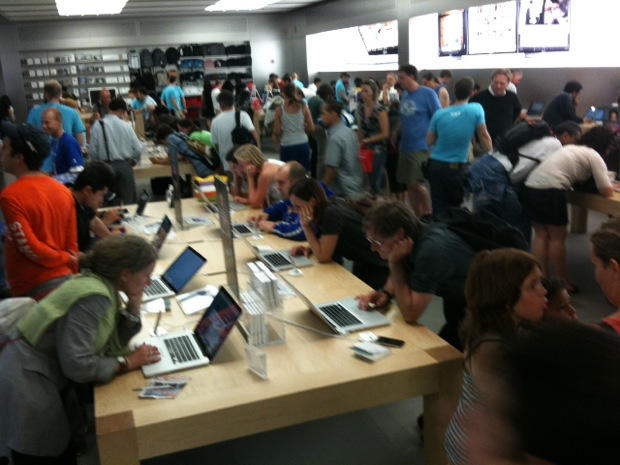
Apple’s Fifth Avenue store sells the equivalent of a Mercedes-Benz C300 in iPods, MacBooks and iPhones per square foot.
As our own Leander Kahney found out on a recent visit to New York, Apple’s Fifth Avenue location is recession-proof, filled with people waiting in lines to buy Apple gear in one of Manhattan’s most famed shopping streets.
But don’t take his word that the store is heaving, here’s what Bloomberg says:
Apple’s Fifth Avenue emporium probably has annual sales of more than $350 million, said Jeffrey Roseman, executive vice president of real- estate broker Newmark Knight Frank Retail. The location is 10,000 square feet, putting its sales per square foot at a minimum of $35,000, based on Roseman’s estimate.
Those sales trump tony jewelry sellers along the famed street — currently earning about twice as much: Tiffany & Co. rakes in just $18,000 per square foot, Harry Winston between $12,000 – $13,000.
Leander noted the place topped by a big glass cube seemed more like a hip bar than an electronics shop, something not lost on the Bloomberg reporters:
Some people even use the Fifth Avenue store as a “pick-up place,” said Consolo, who passes the location every day on her way to work. Tourists used to ask how to find Bloomingdale’s, Saks and Louis Vuitton, she said. “Now they say Apple store, Apple store,” Consolo said in a telephone interview. “It’s the main event.”
Maybe someone will make a movie about Breakfast at Apple?
Via Bloomberg
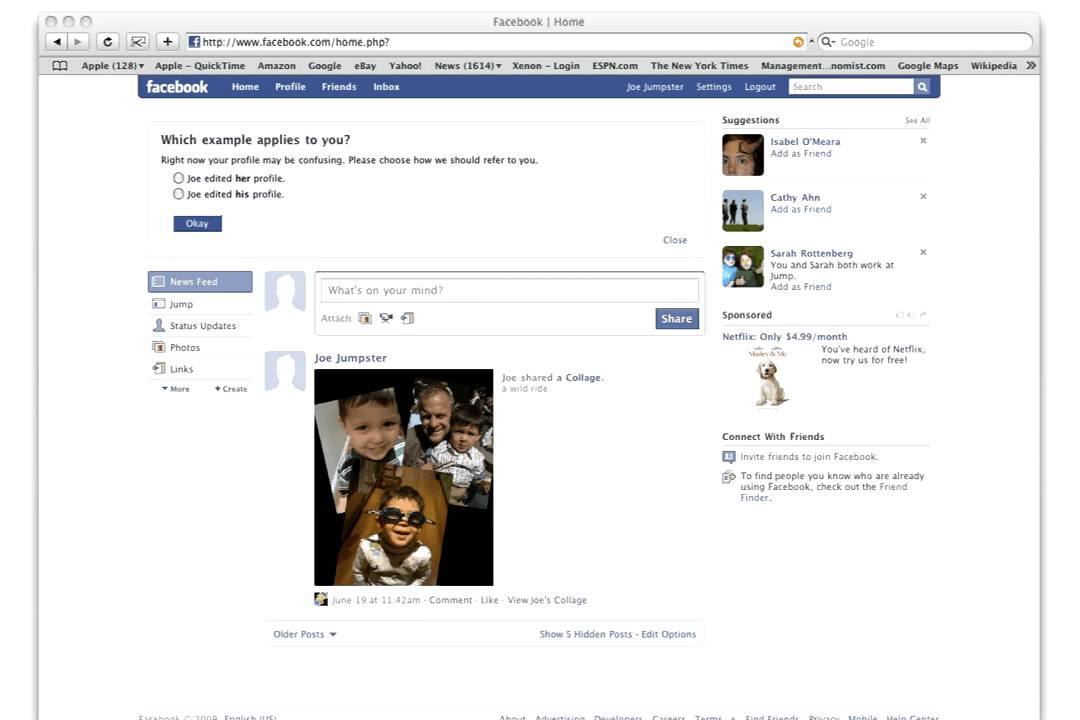
What it is: The developers at Jump Associates – creators of the highly regarded iPhone photo application Pix Remix – have created a free version of the app, called Pix Remix Lite, that blows the doors off of any free photo manipulation software on the App Store.
Why it’s cool: Back in July, we wrote about Pix Remix, the very cool photo transformation application that allows users to easily combine a group of photos with captions into an animated collage or documentary-style narrative show within minutes – and share with friends and family easily via email or posting to Facebook and Twitter.
The free Pix Remix Lite has all the basic features of the highly acclaimed original software, plus some new features that have also been incorporated into an updated version of the 99¢ paid version, making Pix Remix a must-have tool for anyone who likes to share photos from their iPhone.
New features available in both versions let users remix shows others have sent to them, upload photos to a Facebook gallery while posting a show, and embed shows in any blog or webpage.
The paid version of Pix Remix now also lets users save shows locally on their device, export a collage as a high-res JPG (up to 1024×682), and use Copy and Paste to add photos to a show. Users can also save individual photos from a show (one they have created or one they have received) to the iPhone’s Photo Library, allowing for easy syncing with a computer.
Pix Remix Lite limits collages and shows to 5 images, while the paid version supports up to 10 images in a single collage or show.
Check out the YouTube demo here, and go here to see more sample shows like the one above.
Where to get it: Pix Remix and Pix Remix Lite are both available now on the iTunes App Store.

UPDATE: Ah, well it looks like the store was down for Snow Leopard, which you can pre-order now but ships Aug. 28.
Some of the changes (“refinements”) to the latest version:
If there are any other major differences to the Apple store, we’ll let you know.
The Apple store is down. Mac World speculates it’s for the next release of Snow Leopard.
I’m hoping for more of a shake-up — price drops, new product.
We’ll keep you posted.

OK, so we’ve already established that the iPhone camera is capable of some pretty amazing photography, even if you don’t use one of the many fantastic photography-related apps available on the Store.
One thing I’ve not seen it used for to date has been action shots; but Oregon-based photographer Jared Souney has been putting his 3GS to good use for just that.
I wanted to find out how he did it, so I asked him. Here’s what he said.

Goggle’s Voice App undermines the one of the iPhone’s core functions — making phone calls, Apple said on Friday in a response to an inquiry by the FCC.
The U.S. Federal Communications Commission is looking into the rejection of the Google Voice iPhone application from the iTunes App Store. In an unexpected move, Apple has published its response to the FCC on its website.
Apple says the Google Voice app hasn’t been rejected at all — it’s still under review. Apple is taking its time because Google’s app replaces one of the iPhone’s core functions — making calls — with its own user interface and telephony functions.
“Contrary to published reports, Apple has not rejected the Google Voice application, and continues to study it. The application has not been approved because, as submitted for review, it appears to alter the iPhone’s distinctive user experience by replacing the iPhone’s core mobile telephone functionality and Apple user interface with its own user interface for telephone calls, text messaging and voicemail. Apple spent a lot of time and effort developing this distinct and innovative way to seamlessly deliver core functionality of the iPhone.”
In addition, Apple says the Google Voice app doesn’t make use of Visual Voicemail or the built-in Messaging app. And it may violate users’ privacy by uploading contacts to Google’s servers with no assurances the data will be used in “appropriate ways.”
Many had speculated AT&T was behind the app’s rejection, even though the carrier has denied it. Now Apple says AT&T has nothing to do with it.
Apple’s response also throws some light on the murky approval process, which has drawn fire for being secretive and capricious.
* AT&T has no role whatsoever in approving or rejecting apps. The only restriction is no VOIP over the cell network, which is why Skype and similar apps are WiFi only. Weirdly, Apple says it doesn’t know if the Google Voice App has a VOIP element.
* Apple has 40 full-time trained reviewers. Every app is scrutinized by at least two reviewers.
* There’s an executive review board (*cough* Phil Schiller *cough*) to oversee policy and procedure. The review board meets weekly, and deals with apps that present “new or complex issues.” Apple says 95% of applications are approved within 14 days, and the team is working like dogs.
“Apple generally spends most of the review period making sure that the applications function properly, and working with developers to fix quality issues and software bugs in applications. We receive about 8,500 new applications and updates every week, and roughly 20% of them are not approved as originally submitted. In little more than a year, we have reviewed more than 200,000 applications and updates.”
Apple’s full response to the FCC after the jump.
UPDATE: Both AT&T’s response to the FCC and Google’s have been obtained by Engadget. AT&T’s answers are pretty much in line with Apple’s version of events. AT&T “had no role in any decision by Apple to not accept the Google Voice application,” the company says. AT&T says it sometimes “has discussions” with Apple if an app presents the risk of network congestion.
Oddly, Google’s response to the question about its app’s rejection has been redacted. Very odd, when Apple is openly offering its story to the public. Why would the injured party hide its version of events? Smells fishy.

In his first interview since performing Steve Jobs’s liver transplant earlier this year, surgeon James Eason spreads some interesting light on the case.
Namely, he denies Jobs gamed the transplant system; Tennessee has lots of livers for transplantation; the surgeon is the leading experts in recurrences of Jobs’s rare cancer; he treats far more poor blacks than billionaires; Jobs has a pretty good survival prognosis; and the CEO is a “genuinely nice person.”
* Trained at Harvard, Eason is THE leading expert in treating recurrences in the rare type of cancer Jobs had. This is why Jobs went to Tennessee to get a transplant. Jobs always seeks out the best in the field.
* Jobs did not cheat the system to get a transplant. “It’s not gaming the system,” Eason says. “It’s people choosing where they want their health care.”
* Jobs’s prognosis looks good. Eason only performs a liver transplant if he’s certain he can eliminate all the spreading cancer. About 70 percent of patients have healthy organs five years after surgery.
* Memphis has more livers than patients. Or did, until Eason ramped it up. His Memphis hospital performed 35 transplants in 2005 (before he arrived). In 2008, he jacked it to 120 transplants, and 90 so far this year.
* Jobs is “really a genuinely nice person” and “a special person,” says the surgeon. Perhaps he also performed a personality transplant? Or more likely, Jobs made sure not to piss off the man who held his life in his hands.
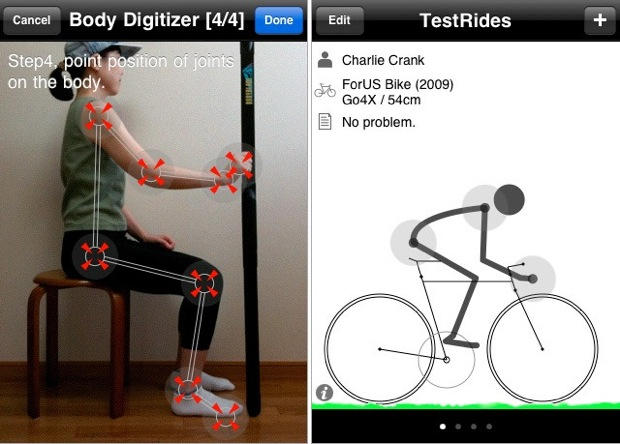
The most important thing about getting a new bike is making sure it fits right. It’s all the difference between pleasure and pain — and very possibly a pair of blown knees.
The Test Rides iPhone app is a specialized but handy “virtual bike fitting room” that measures you up for a new bike. It looks handy for figuring out whether that beautiful bike on Craigslist will actually fit you.
First you take a picture of yourself from the side — you’ll probably need help. You then mark your joints on the picture: knees, elbows and ankles. The App calculates your body size.
Then you input the dimensions of the bike you want to buy – the top tube, bottom bracket, crank length, etc — and the App tells you whether the bike is a good fit or not. This part is a bit of work. Many used bike listings do not include all the measurments, and even the amount of info online about new bikes is inconsistent. While a lot of manufacturers have all the data, some do not.
Still, if you’re about to buy a new bike and have most of the measurements, spending $5 on this app seems like a good precaution to make sure it fits right.
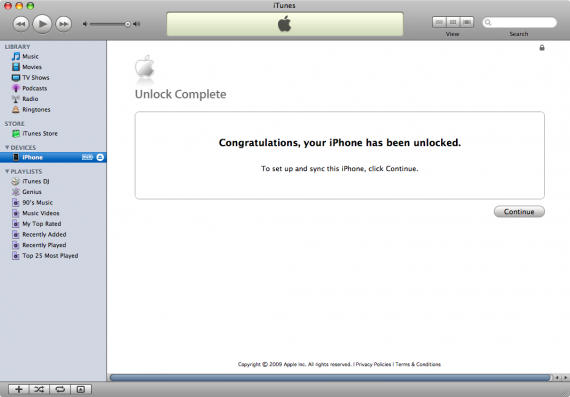
Apple in Europe may unlock your iPhone if you have pay off your carrier contract, one blogger has discovered.
Olly Farshi of TheAppleBlog.com didn’t have to jailbreak or run ultrasn0w to unlock his iPhone.
He simply asked his carrier to unlock his iPhone 3G after paying off a two year contract. The carrier, Finland’s Sonera, submitted the request to Apple and the next time Farshi synced with iTunes, the software had him install an official carrier update.
Then iTunes displayed something rarely seen: an official message saying his iPhone had been officially unlocked. See the screenshot above.
“Regarding Sonera, think of it as a less-repugnant version of AT&T,” Farshi writes. “As the exclusive distributor of the iPhone over in Finland, Sonera has turned out to be a somewhat benevolent carrier.”
He continues: “Going the legit route was a much more painless process than using a proxy SIM or the Dev Team’s unofficial unlock. Also worth noting is that, unlike some of the illicit approaches, this unlock is permanent: I’ll be able to keep updating the iPhone’s OS without losing the ability to use any carrier SIM in the device.”
No word on whether AT&T will do this. Has anyone tried?
BTW: It is possible to buy factory unlocked iPhones for $1,000+.

UPDATE: This now looks like a Javascript alert buried on a webpage, not a push notification. See below.
The iPhone’s Push notification system may be vulnerable to spam and malware popups.
CoM reader NyxoLyno Cangemi was using NetNewsWire RSS reader on his iPhone when what appears to be a push notification for anti-virus software popped up. See the screenshot above.
The popup message says his computer has “vulnerabilities and threats” and needs an immediate virus scan.
The popup is a notorious “rogue anti-virus” message, designed to trick naive websurfers into surrendering credit card details to fake anti-virus vendors. The unsuspecting websurfer see the message, follows the link and buys fake anti-virus software that steals their credit card number and installs malware.
The website URL in the iPhone popup points to a known rogue site, safeonlinescanv4.com, according to security firm MacAfee’s SiteAdvisor service.
The iPhone 3.0’s push notifications allow messages or alerts to be pushed to the user — incoming IM messages or new e-mails, for example. Apple billed the system as an alternative to battery-draining background processes. NetNewsWire for the iPhone does not offer push notifications. I’ve contacted the developer, NewsGator Technologies, for comment.
Have spammers and spyware frauds found a way to spam iPhones using push notifications? Anyone else seen this?
UPDATE: I asked CoM reader Cangemi what he was doing when the message popped up. Cangemi says he was browsing a folder of links, not any particular site, which was showing a list of headlines from his Sirius radio RSS folder. “I was scrolling through the list at the time it happened, which leads me to believe it was a push notification and could have occurred no matter what I was doing,” he says. In the comments, reader Matt J. reports he got a similar popup while using Safari, which again suggests push.
NewsGator Technologies forwarded an email from NetNewsWire’s lead developer, who also says it looks like a push notification.
He says: “I haven’t seen this before. NetNewsWire doesn’t use the push notification system. But other apps do, and a notification can appear in front of any other app. So I have no way of knowing where this notification came from. Another possibility is that he’d gone to a web page in NetNewsWire that has a JavaScript alert that put up that popup. It would be great to know exactly what pages he’d visited, but I realize it’s hard to find out after-the-fact.”
As Cangemi says, he wasn’t visiting a particular page, but browsing a folder of links. So it looks like push notification is the culprit.
UPDATE 2: In the comments readers Michael Weisman and DerekS say it’s more likely a Javascript alert dialog. “The default buttons on a push notification are ‘Cancel’ and ‘View’ where ‘View’ would launch the pushed-app,” notes DerekS.
“NetNewsWire has an integrated browser for reading stories,” notes Weisman. “This probably was designed to come up when the user navigates away from a page, so it popped up after the user went back to the story list. Also, the push notification system has a ton of security. The whole thing is encrypted, and the user needs to approve an app before it will even send them. There is no way for an app to send malicious notifications without your approval.”

As Microsoft begins hiring for its first retail stores, the giant is showing it’s usual flair for naming. What Apple calls a “Genius,” Microsoft is calling a “Retail Technical Advisor.”
Microsoft is hiring for its first two stores in Scottsdale, AZ and Mission Viejo, CA., which are due to open in September. While Apple is at pains to emphasize that its retail jobs are “More than a retail job,” Microsoft puts the word “retail” in its job titles.
According to the job listings, here’s how Microsoft breaks down other jobs in the store compared to Apple.
Concierge = Retail Customer Service Associate-Full Time
Personal Shopping Specialist = Retail Sales Associate
One to One Trainer = Retail Trainer
And here’s how Microsoft pitches its store to employees, compared to Apple. Where Apple says, “Be the face of Apple,” Microsoft says “You have unique experiences, skills and passions—and we believe you can bring them all to Microsoft for a rich, rewarding career…” in retail. Which is more compelling and less BS?
Microsoft:
You have unique experiences, skills and passions—and we believe you can bring them all to Microsoft for a rich, rewarding career and lifestyle that will surprise you with its breadth and potential. Just imagine the excitement and satisfaction of what you can do, where you can go, and the difference you can make with the resources of Microsoft behind you.
Apple:
Be the face of Apple—help people learn about, shop for, and get the most out of their Apple products. That means we’re not just looking for people with retail experience. Creative pros, technical experts, and business consultants have a place here, too.
Today’s deals include Power Stacks for your iPhone or iPod touch free from the Apps Store, the PowerBug AC adapter for free and iPhone cases almost free – 85 percent off.
For details on these and many other bargains, check out the CoM Daily Deals page.
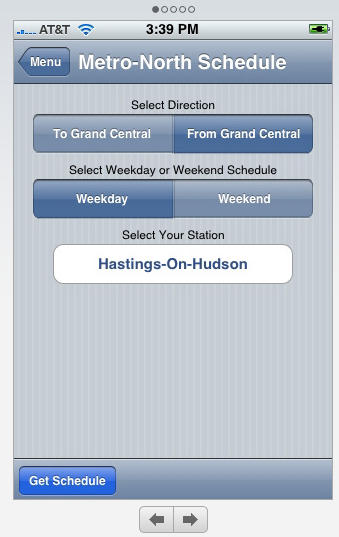
New York’s Metropolitan Transit Authority wants to derail an independent iPhone app that publishes train schedules for violation of copyright.
Called Station Stops, the $2.99 app available on iTunes, is the work of commuter Chris Schoenfeld, who also writes the blog of the same name.
The app provides the timetable of the Metro-North Railroad for regularly-scheduled trains departing and arriving from Grand Central Station.
The MTA provides its schedules to Google Transit, but doesn’t release the data publicly.
To build his app, Schoenfeld did it the old way — by entering data manually from the published public schedule.
Schoenfeld, who has often been critical of MTA service, got a nastygram from MTA lawyers ordering him to stop presenting himself as an official service — and pay licensing fees for the schedules.
The MTA reckons the developer owes them a share of profits from the app, back pay the licensing fees. And a $5,000 non-refundable fee.
Schoenfeld’s not interested in ponying up. His sensible David versus ham-fisted Goliath story received a lot of sympathetic local news coverage — but that didn’t stop the MTA from asking Apple to take down the app on Aug. 14.
As of this writing, Station Stops is still for sale.
As one station stops blog reader, Karen Cavanaugh commented:
“I always use Station Stops to check the train schedule when I visit my daughter in Hoboken, NJ. I never think of it as an “OFFICIAL” website. I’ve been to the official website and it’s awkward.”
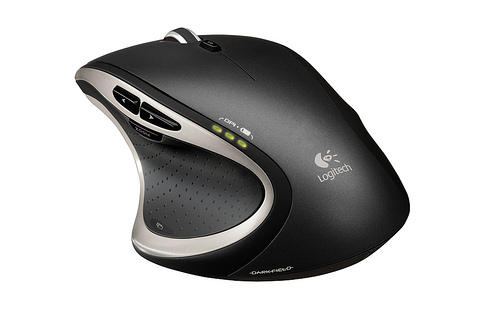
Ever since the first computer laser mouse rolled out, it has required a reflective surface – meaning you had limited options for your pointer. Logitech hopes to do away with that barrier, unveiling two laser mice using the company’s so-called “Darkfield Technology.”
The Performance Mouse MX ($99.99) and the Anywhere Mouse MX ($79.99) offer the technology which can use microscopic deformities in otherwise absolutely clear surfaces, such as glass. A video shows the mice tracking on glass and a mirror.
[Via Logitech]
You have to see this to believe it. Above is a demo video of Paris 3D, a tourist guide to France’s beautiful capital city in photo-realistic 3D.
It looks absolutely stunning. The detail is unbelievable. Here’s a massive virtual city on your iPhone — right down to the gargoyles. There’s even people and vehicles — plus their shadows! — for added realism.
You can zoom in to particular streets or buildings, or zoom out to get a global view of the city’s layout. Tap on a building to get a data sheet on the structure, which includes the building’s history, photos, and where appropriate, phone numbers or opening times (like a museum).
Type a destination, and you zoom across the 3D city to see it.
You can to highlight particular categories of buildings — hotels and restaurants, for example, which show up color coded on the 3D map, making them easy to spot in a global view. The app is GPS-enabled, so you just tap a button to get directions. Street names are overlaid.
Performance looks fantastic. It renders better than Google maps. The demo looks like it was filmed on a iPhone emulator running on a developer computer. But if performance is as good on a real iPhone, it’ll be killer.
The app has just been submitted to the iTunes App store and should be available soon pending Apple’s approval.
The developer, Newscape Technology, claims it took twenty man-years of R&D over a four year period to develop, and is the first in a series of city guides.
Move over Google Maps!
 Have you maxed-out your iPod or iPhone storage? We all likely have a good chunk of the 16GB or 80GB storage still free. Why not put that empty room to use by turning it into backup space? That’s the idea behind Storage Appliance Corporation’s Clickfree Transformer for iPhone and iPod, a device that copies data from your computer’s hard drive to your MP3 player or phone.

ID Software’s browser-based shooter Quake Live is finally available for Mac users — mostly.
An update to the game’s servers means the game can be played on Safari on the Mac, but not Firefox.
“This update is Safari only, but we’ve pushed a ticket with the folks at Mozilla and hope to have the Firefox build fixed very shortly,” ID says.
Based on the popular Quake 3 Arena, Quake Live is a free, browser-based shoot-em-up. It features more than 40 arenas and five game modes, including duel, capture the flag and group deathmatch. Players can frag each other or computer-controlled bots, and can be matched according to skill level. The game requires a plugin to play. It is not Flash based.
The game went online earlier this year, but Windows only. It’s been wildly popular: more than 113,000 player accounts were created in the first six hours.

If you’ve never published a photo book using iPhoto’s built-in book publishing system, you should. They’re gorgeous. It’s amazing how your digital pictures take on new life when printed on the glossy pages of a bound book.
There’s now the option to print a larger hard-cover book measuring 10 inches by 13 inches, thanks to an iPhoto 8.1 software update. Until now, the largest book option was standard 11 inches by 8.5 inches.
The iPhoto ’09 update also adds new holiday cards and three new travel-oriented book themes.
Be warned: the update weighs 161MB. It is available to iPhoto ’09 users via Software Update.
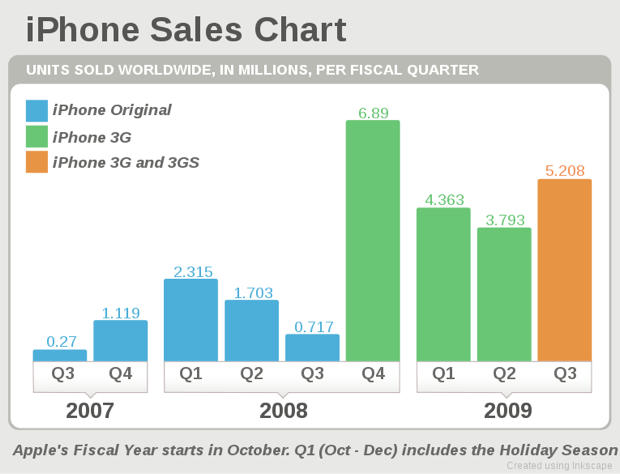
Apple will to sell a massive 50 million iPhones a year by 2011, Wall Street analyst Toni Sacconaghi says.
In a research note on Wednesday, the Bernstein Research analyst said Apple will achieve this just by holding onto current market share and adding new countries and carriers.
Sacconaghi’s predictions are in line with estimates from a RBC report on Tuesday, which also estimates 50 million iPhones in 2011. Apple has sold 26 million units since the iPhone’s debut in 2007. Sacconaghi estimates Apple will sell 20 million in 2009.
* More smart phones: Smart phones will grow 27% a year in 2010 and 2011, Sacconaghi says.
* More carriers in more countries: Apple could add 11 million units by adding Verizon Wireless in 2011 when the exclusive AT&T runs out. Plus more carriers in existing markets will add 3.5 million in European and 4 million in Asia.
* China: Sacconaghi estimates a deal with China Unicom is worth 2.9 million iPhones in 2011; and maybe 6 million if Apple also adds China Mobile.
The numbers could be even bigger if Apple adds pre-paid iPhones and WiFi-only iPhones, Sacconaghi says. He notes 75% of the global cellphone market is prepaid.


