Multimedia designer Federico Mauro‘s got Mac on the brain: his Flickr stream is a constant source of quirky, Mac-related designs and spoofed ad campaigns.
His vision of what’s really inside your Mac Pro includes a feet-on-the-desk work environment that includes a mini-golf area, plus Apple logo topiary in the garden and a well-populated pool, where a couple of those bathing beauties appear topless.
Hit the jump for more of his designs — including the modern designer’s workbench and a game of Tetris played with Macs — plus few words about why he does it.
Google Chrome 4.0 Beta is the fastest webrowser on the planet, CNet claims.
In benchmark tests, the new Chrome beta smoked Safari, rendering JavaScript 34% percent faster.
“It completed the SunSpider JavaScript benchmark in just 657ms. Only 4 per cent faster than its PC brother, sure, but 34 per cent faster than Safari 4.0.3, which scored 886ms on the same 2.0GHz Intel MacBook.”
In the same test, Firefox version 3.5.2 on OS X scored 1,508ms and Opera 10 beta 3 scored 5,958ms, CNet says.
JavaScript rendering is important because developers are using it more and more to add bells and whistles to websites. CNet cautions though that the software is alpha, and will be retested against Safari when the final version ships in several months.
And while speed is important, the browser is nowhere ready for public consumption. “Chrome for Mac is still riddled with bugs,” says CNet. “Big ones, like those spiders in Eight Legged Freaks, only even more hellacious.”
Apple is planning a special media event for the week of September 7, MediaMemo reports, citing “multiple music industry sources.”
But Apple won’t tell anyone exactly when the event is. Apple always holds keynote presentations on Tuesdays, so the likeliest date is September 8.
Apple has held a keynote event every September for the last four years to introduce its consumer-focused holiday offerings, typically new iPods and new versions of iTunes.
At this event though, Apple could be introducing several things:
* Cocktail: The presence of multiple music execs suggests a music focus. Apple’s rumored Cocktail project is a secret skunkworks rethink of the LP for the digital age. But it is rumored to be part of the secret tablet project though…
* The Tablet: Many expect the fabled Apple tablet as early as September.
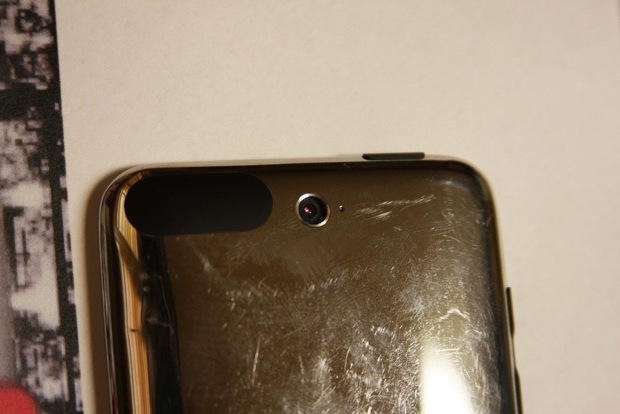
* New iPods: New iPod Nano and iPod Touch with cameras. This seems the most likely.
* iTunes 9: The next version of iTunes is tipped to get Blu-ray, social software support and iPhone app organization. Also seems likely.
* Steve Jobs: Will Jobs make his first public appearance since returning from medical leave?
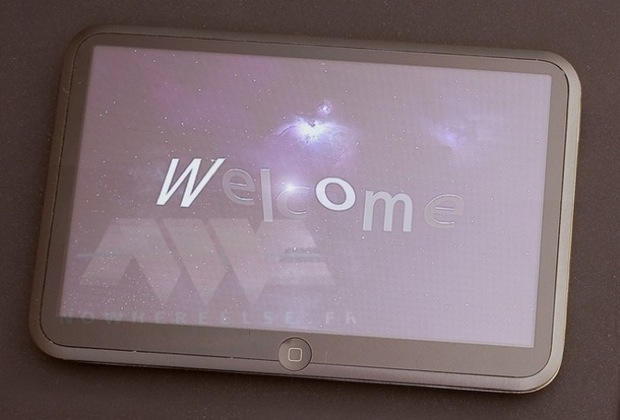
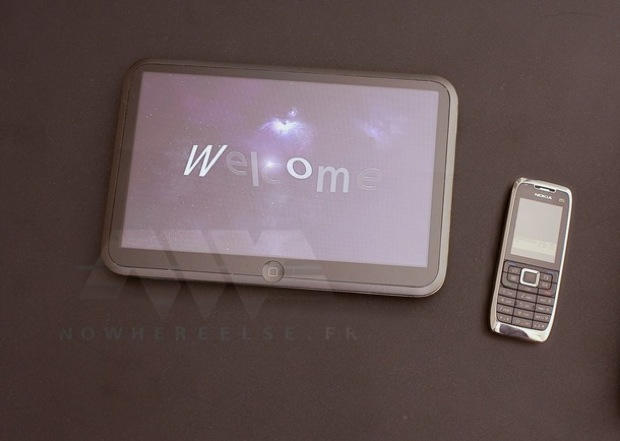
* The tablet is real (we already knew this though — CoM’s sources have also confirmed it).
* 10-inch screen.
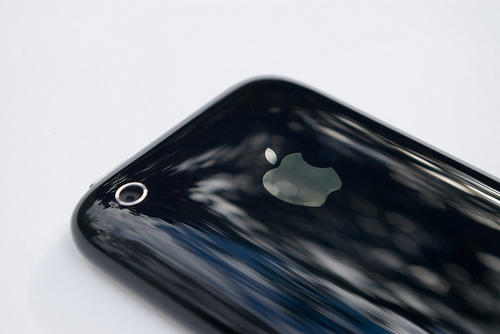
* Looks like a giant iPhone with the same Home button and a shiny black plastic back.
* Two editions: One with a webcam and one for education.
* Will sit between iPod/iPhone and a MacBook, costing $700 to $900.
* Will also function as a secondary screen and/or a touchpad for iMacs and MacBooks, like this 7-inch external USB monitor form MiMo.
* It’s been under development in one form or another for six years, but the first prototype was built at end of 2008. Time to market is 6-9 months, pegging the device’s release date this holiday season.
But just as Lam — who is a great reporter and a straight-shooter – was was about to get to the juicy bit — what OS the tablet will run — his iPhone dropped the call. Classic!
Writes Lam: “My call dropped on some windy road off Skyline Drive. Fucking AT&T.”
UPDATE: I contacted Lam, who said his source didn’t know the tablet’s OS. It’s the biggest secret surrounding the device, he says. Entrepreneur and ugly dog-lover Jason Calacanis just tweeted it runs a modified version of the iPhone OS, citing a developer. Maybe. Here at CoM, we like the idea it’ll run Mac OS X Snow Leopard.
Outlook is coming to the Mac, Microsoft’s Mac Business Unit said on Thursday. The next version of Office for Mac will replace Entourage for Mac with a new application – Outlook for Mac.
Is this good news or bad? I hate Entourage, but I hated Outlook on Windows even more when I had to use a PC. In fact, Outlook is my second-most hated program of all time, right behind Lotus Notes.
Outlook for Mac will be included in Office 2010 for Mac, which Microsoft said will be ready for the holidays next year. (Apple has promised better Exchange support in Snow Leopard. It’s likely that Microsoft announced Outlook so far in advance to discourage current Entourage users from switching to the new Exchange-compatible version of Apple Mail coming in Snow Leopard).
It will include:
* A new database and Exchange protocol. Database supports Time Machine backups and Spotlight searching — finally!!!!
* Better cross-platform collaboration and calendering.
* Built from the ground up in Cocoa to offer better performance, better OS X integration, and get this, “make Outlook beautiful,” said said Eric Wilfrid, general manager for the MacBU.
No word on whether Outlook for Mac will be compatible with PST files exported from Windows versions of Outlook, which are a bear to import into other email programs.
Meanwhile, Microsoft is reducing the number of versions of Office it offers from three to two. Alongside the Standard Edition, it is now offering Microsoft Office 2008 for Mac Business Edition, which bundles Entourage Web Services Edition and Microsoft Document Connection for Mac.
It will be sold alongside the current Standard Edition for the same price: $399, or $239 to upgrade. It is available to some customers today as a download or on Sept. 15. in shrinkwrap.
Today’s gadgets seem perfect for any iCowboy (or iCowgirl) lookin’ to rustle up some deals on Apple gear. For those packin’ an iPhone, we have a leather iPhone holster. If you need some accompaniment on those long cattle drives, there is a $40 deal on iPod speakers from Logitech. Finally, it gets dusty out on the range, so we also have 60 percent off on screen protectors.
For details on these and many other bargains (maybe even a cowboy dictionary) you can belly-up to the CoM Daily Deals page.
There’s a pair of great but fake videos making the rounds of the Apple tablet. Two videos posted to YouTube supposedly show the tablet running the iPhone OS on some kind of development hardware. The hardware controls — volume, the home button — are on a separate hardware box wired to a large touchscreen screen. So it’s not the genuine hardware, but something like a breadboard.
It looks great. The device can run multiple Apps simultaneously. App windows are tiled on top of each other and can be moved around on the touchscreen. The App bar runs the full length of the screen at the bottom like the Dock in OS X.
But unfortunately it looks totally fake to me. The up-close, grainy video just seems too constrained. Whoever shot the video doesn’t want to show too much — just enough to tease the viewer. If it were a real spy video it’d be much less Blair Witch.
UPDATE: As reader Gene points out in the comments, it’s interesting because it shows how the tablet might run current iPhone/iPod apps: “Fake, but gives us a good idea for dealing with the fixed size of iPhone apps on a larger screen: basically, every app becomes a dashboard widget. Simple, and apps don’t have to be resized!”
Also, after the jump, screenshots of the same device have been posted to the MacRumors forums. One of the screenshots shows the “About” screen. The device runs OS 3.0 and has a memory capacity of 120GB. The model number is N/A and the serial number: W8922DP91SO.
I ran the serial number through Chipmunk International’s serial number tool, which returns details of the hardware’s specs, manufacture date, the factory it was made in, and so on. This serial number wasn’t found in the database.
Apple’s been getting a lot of flak lately for its heavy-handed App Store policies – a direct consequence of its new-found status as a market leader, says author Graham Bower.
For years, Apple capitalized on its underdog status, able to skirt the rules because it was always coming in second.
But now that it dominates with products like the iPod and iPhone, it’s getting the same kind of grief that dogged Microsoft for years.
Bower, who lives in London, has just published a fascinating new book called Secondonomics: How Coming Second Can Be a Winning Strategy, which is about the advantages of coming second. Contrary to popular belief, winner doesn’t take all. Take for example what happens to the first penguin into the water versus the second. Which one gets eaten?
Apple figures large in Secondonomics. Bower argues that Apple has gotten a lot of passes because of its underdog status.
“The Mac has a big advantage over Windows because it’s the second most popular desktop OS,” says Bower. “It’s not targeted for viruses as much, and it’s not targeted for anti-trust cases. Can you imagine Microsoft getting away with hooking something like MobileMe so tightly into their OS?”
Hit the jump for a fascinating IM interview with Bower, who’s a smart cookie. Bower has a lot of insight into Apple, coming second, the challenges Apple faces as it becomes bigger, and Steve Jobs’s psychological need to be an underdog.
After Canada’s Rogers Wireless told Gizmodo “There is no 8GB 3GS iPhone,” the website has turned up a photo of the company’s internal sales system showing that low-and-behold, there is an 8GB iPhone 3GS after all.
Reportedly sent by a Rogers’ employee, the photo of the system shows an 8GB 3GS priced at $74 — the same price as the current iPhone 3G that it will likely replace ($99 – $25 customer discount).
“This is the second such internal reference to a 8GB 3GS to come from Rogers in as many weeks, not to mention their recent website fiasco, where an 8GB 3GS was listed in a feature comparison chart, then deleted as ‘a mistake,'” says Giz. “None of these leaks stand alone as totally convincing, but three unconnected reports? That’s a little too much to ignore, even for a skeptic.”
To make sure that its massive new data-center is energy efficient, Apple has just hired a top eBay executive and leading expert in the “greening” of cloud computing facilities.
Apple has picked up Olivier Sanche, eBay’s Senior Director Data Centers Services and Strategy, according to the Green Data Center Blog.
Based in San Francisco, Sanche has helped make eBay’s massive global operations carbon neutral since 2007. Most recently, he helped oversee the construction of eBay’s newest data-center, which will meet the highest green standards when it goes online in 2010.
“This new center is built to meet LEED Gold standards,” Sanche writes on his LinkedIn profile. “We broke ground in late-2008 and we are on track to deliver state-of-the-art efficiencies in cooling and power management.”
It looks like Apple needs someone of Sanche’s stature for its fast-growing cloud computing operations.
Apple is building its own huge data-center in North Carolina. The billion-dollar facility will reportedly be 500,000-square-feet and will serve as Apple’s primary East Coast data-center. In 2006, Apple bought a giant 107,000-square-foot facility data-center on the West Coast, in Newark, Calif. The new North Carolina facility will be nearly five times the size of Newark operation. Ground is expected to be broken later this month.
At eBay, Sanche helped to green a massive data-center operation. The auction company runs more than 15,000 servers worldwide to support of 84 million eBay users. Sanche says the company has been carbon neutral since 2007 thanks to a combination of conservation, solar energy, facilities management and a high-quality carbon offset program.
Sanche is also Vice Chair of the advisory council for The Green Grid, an industry consortium that promotes energy efficiency.
Philip Schiller, Apple senior vice president and recently the company’s public face at product launch events and conference keynotes, is on a roll. In fact, some might conclude he’s replaced a significant portion of Apple’s PR department, given the press he’s received lately for personally addressing issues with the much-maligned iTunes App Store.
First, of course, came his extensively re-printed email reply to Daring Fireball’s John Gruber, setting the blogger straight on the chain of events surrounding the iPhone dictionary app Ninjawords’ path to App Store approval.
And while Schiller did not — so far as we know — personally respond to Tech Crunch writer Michael Arrington’s very public abandonment of the iPhone, he did reach out personally to Steven Frank, the highly regarded developer and co-founder of Panic, who had previously made his own frustrations with Apple and the App Store publicly known.
Back when he was The Man at Apple, Steve Jobs was known to send people personal email from time to time, with such mail inevitably making its way to public attention and, more often than not, garnering Jobs and Apple invaluable attention and promotional good will. It was one method by which the company grew into its current status as one of technology’s two or three biggest powerhouse brands while maintaining a sense of being smaller than it really was, of being personal and approachable even when, in fact, it was neither.
Schiller’s carrying on of the strategy should be seen, in any case, as a good sign, an indication that, as he put it in his email to Frank, “we’re listening to your feedback”. And while, as Frank wrote about his exchange with Schiller, “technically, nothing specific has actually visibly changed,” the goodwill Apple cultivates is invaluable when a senior vice president reaches out personally to people who publicly complain about the company.
The last, best words in the matter may also be Frank’s: “communication will solve this problem — not silence.”
Apple shot a TV ad for an unreleased product at Jax Truckee Diner on Tuesday. Picture with permission by Alan Moore: http://www.flickr.com/photos/alansf/3777374579/sizes/o/
Amid tight security, Apple shot a TV advert for an unreleased product at Jax Truckee Diner on Tuesday afternoon.
Unfortunately, there are no pictures or even a description of the mystery product. Because of the security, no photographers or reporters were allowed on set. Filming took place on Tuesday afternoon.
“Apple found us, they’re trying to show us as a hip and cool spot for the 20-something crowd,” Jax on the Tracks owner Bud Haley told the Sierra Sun newspaper.
But if Apple is already shooting ads for the new product, chances are its release is imminent. After all, the probability of leaks are much greater when products are sent to outside partners like advertising agencies.
Jax Truckee Diner is a classic 1940s-style diner next to the railroad tracks in downtown Truckee, California.
The question is, why would Apple put a Web tablet in a diner? Perhaps to show a crowd of hip 20-somethings sitting around a booth, playing digital 45s before watching a streaming MTV video and then ordering waffles over WiFi?
UPDATE: I called Bud Haley, owner of the diner, who in a roundabout way confirmed the shoot, and said it was “exciting.” Unfortunately, Apple has him tied up in a confidentiality agreement, and he couldn’t/wouldn’t say if the ad was for a new product or an existing one.
“As you can imagine, I’ve got to be careful and confidential,” he said. “I can’t say anything about it, I’m afraid. I’d love to give you more info, but I can’t. No comment is the best comment.”
Asked if his afternoon yesterday was exciting (I was desperate), Haley said: “Obviously, anything where Apple is involved is exciting. But I still can’t tell you anything. Sorry.” Haley has taken several calls from reporters and was very patient and gracious. He’s a good sport and is handling the nosy questions very well.
Here’s what Jax looks like inside:
Inside Jax Truckee Diner. Photo from Chow: https://www.chow.com/photos/366836
iPod/iPhone fans are always in search of the perfect speakers to blast their favorite tunes in the most comfortable, affordable and longest-lasting way. While the search for that holy grail continues, Logitech early this morning provided two new entrants – one boast near ’round the clock music and another promising portability but with booming bass.
Trashy? Macs destined for landfill from an elementary school in Florida.
After our post on yesterday’s en masse binning of hundreds of working Macs from a “PC only” school district in Florida, a reader who wished to remain anonymous sent us pics of those computers destined by that school for the trash. We also received comment from a school administrator.
First things first: here they are, stacks of laptops and neat rows of Macs destined for the rubbish heap. Our tipster says more than 208 perfectly good Macs are headed for the dump.
As many of you pointed out in the comments of yesterday’s piece, even if the school district didn’t want to use the Macs, they could’ve sold them and used the money — or given them away instead of just dumping them.
More pics of the great Florida Mac massacre & commentary after the jump.
iHome Audio has unveiled its iP1 high-end portable stereo for the iPhone or iPod. The $299 iP1 features the company’s Bongiovi Acoustics’ Digital Power Station (DPS), touted to create richer sound without bigger speakers. The iP1 includes a dock for the iPhone, or iPod, plus a 3.5-inch auxiliary input.
Although not available until October, iHome is taking pre-orders for the stereo. The stereo includes two 40W 4-inch woofers and two 10W 1-inch tweeters.
Along with the iPhone/iPod dock, the iP1 also includes a remote for iPod menu navigation.
Sling Media has submitted an update to its groovy SlingPlayer Mobile app for iPhone that promises, among other things, true 16:9 widescreen support and, in markets not saddled with an exclusive AT&T service provider’s agreement, TV streaming over 3G.
Slingbox owners with DISH Network will also be able to navigate using a touch-supported native browser, instead of pushing through the TV-standard browsing screen being streamed in by the current version of the app.
Of course, the upgrade must first be approved by the App Store review overlords, and by now it’s well known what a capricious bet that can be. Sling Media has submitted a version for use outside of the US that would allow for streaming over a 3G connection, according to reports, and it’s no certainty Apple will approve such functionality for its customers abroad, either.
What is certain is that, regardless what Apple may feel about streaming TV over 3G, the specter of AT&T’s exclusive service agreement in the iPhone’s largest market effectively prevents US consumers from realizing the full potential of Apple’s inventiveness.
There are two things that really piss me off about iPhone… Actually, that’s a huge lie. There are loads of things that piss me off about iPhone, but two things in particular make me want to HULK SMASH. The first is that you can’t back-up individual app data. Delete Peggle from your iPhone, reinstall and you have to start from scratch. Clearly, whoever decided on that gem went to ‘cheapskate DS games without battery back-up’ school.
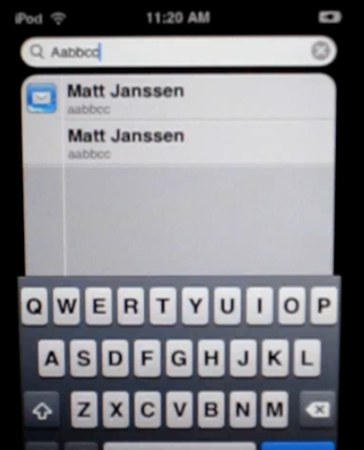
The other issue is that it’s a major pain in the arse (or ass, if you’re American) to rearrange apps on your device’s home screens. The current ‘drag everything about’ system was clearly designed for hardware where it wasn’t possible to download fifty billion apps. And although Spotlight in OS X iPhone 3.0 enables you to find apps within the mess, you shouldn’t be using text-based searching to find apps on such a tactile, touch-based system.
What we’d like to see is this:
httpv://www.youtube.com/watch?v=-wfv0OJ1oMQ
If you can’t be bothered to watch that, it shows an iTunes interface for dragging and dropping apps about, the organisation of which would then sync with the device itself. Rumours suggest this functionality might appear in iTunes 9, but I remember similar things being promised before.
A press release I received this morning about ShareAppScreen made me hope that someone had somehow managed this, outside of Cupertino. I was hoping for magic beans: someone to have figured out how to rearrange iPhone screens using a widget. What I got was baked beans—a widget that’s awkward to use and that doesn’t realise that different iPhones actually have different apps pre-installed. And when you’re done, it can share your screens with your friends, but not with your device, sadly.
Overall, it’s better than using something like Photoshop for testing app arrangements, but other than that, it’s a case of ‘roll on iTunes 9’.
Today’s deals include iMacs starting at $399, refurbished MacBook Pro laptops at $999 and wake up to your favorite iPhone/iPod tunes with the iHome Clock Radio. Details of these and plenty more can be found on the CoM Daily Deals page.
Here’s a game that 3D Realms has actually shipped. Duke Nukem 3D, the classic first-person-shooter from the mid ’90s, is available for the iPhone and iPod Touch.
3D Realms is famous of course for not shipping games. It’s follow-up to Duke Nukem — Duke Nukem Forever – has been promised for more than a decade, earning a top slot on Wired.com’s Vaporware awards year after year.
Duke Nukem 3D is a simple port of the 13-year-old game. It’s pixely and low res — but who’d want it any different? The controls are a little difficult to master, according to reviews on iTunes, which are generally favorable. Players are reveling in gaming nostalgia.
Good news for haters of Apple’s glossy MacBook screens: the matte display is back as an option on the 15-inch MacBook Pro, although Apple is charging an extra $50 for it.
Check Apple’s online store. The glossy widescreen display can be replaced with an optional antiglare display. The specs are the same — 1,440 x 900 pixels and a LED backlight — but the matte display has a silver bezel around it instead of a black one. Plus it costs an extra $50.
Apple’s not selling it though. Look how the website copy downplays the antiglare option:
“Choose a standard glossy display that lets you view graphics, photos, and videos with richer colors and deeper blacks, or an optional antiglare display.”
The matte screen was already an option on the top-of-the-line 17-inch MacBook Pro, but isn’t yet offered on the entry-level 13-inch MacBook Pro. It’s just a matter of time though. I personally like the glossy screens, which I think look great. I’ve never, ever been distracted by its much hated “mirror” effect.
Apple knickknack collector Tadataka Goh has spent perhaps $100,000 on Apple collectibles.
Meet Tadataka Goh, a Japanese jazz bassist who is perhaps the world’s biggest collector of Apple-branded goods — you know, Apple t-shirts, pens and hats.
Over the last 15 years, Tadataka has amassed the largest collection of Apple knickknacks on the planet. He has thousands of items, including hundreds of pens, t-shirts, baseball caps, posters and buttons. He has the first issue of Macworld magazine and an Apple-branded traffic cone.
Tadataka has possibly spent more than $100,000 on them. That’s right — more than $100,000.
“Looking at his collection, he’s probably spent several hundred thousand dollars,” says Steve Naughton, co-owner of RedLightRunner.com, which sells Apple collectibles and counts Tadataka as its best customer ever.
The Japanese are well-known for being enthusiastic collectors, and the most otaku can be fanatical completionists. Even so, the scope of Tadataka’s collection boggles the mind.
He’s got so much stuff, even he doesn’t know how much he’s got. He recently posted pictures of more about 4,000 items to an online gallery, and has scores more pictures to upload.
Click on to see some of Tadataka’s collection. You have to see the photos to appreciate how big this collection is.
Corporate IT support for the iPhone is on the rise, according to a report Monday at Tech Republic, though many CIOs and IT directors remain wary of the Apple smartphone’s security vulnerabilities.
Using an interesting (if not altogether scientific) polling strategy pioneered by Silicon.com, Tech Republic finds 42% of corporate IT departments are now willing to support the iPhone in its 3rd iteration, which is quite a swing from the near-universal skepticism with which corporate IT greeted the device upon its initial launch two years ago.
Results of the poll ought to be taken with a grain of salt, as the numbers themselves are based on the responses of just 12 individuals, but the comments included with the report are interesting nonetheless, and say as much about the way some corporations think as they do about Apple’s gadget itself.
Some corporate leaders, such as Mike Wagner, CIO of Stone & Youngberg in San Francisco seem to just get it. “The iPhone is one of the most innovative and revolutionary end-user products developed in the last 5 years,” Wagner said, adding “The support and training requirements for the iPhone are orders of magnitude less than the mobile OSes offered by competing vendors.” Wagner also noted “the general excitement and enthusiasm from the end users” in his company with iPhones, linking it directly to “a corresponding decrease in the perception that IT is a wet blanket that is an impediment to the use of consumer-friendly products.”
Still, the majority of corporate IT geeks don’t consider supporting the iPhone because, as Lisa Moorehead, Director of IT for MA Dept of Public Utilities put it, ““iPhones are not supported because they are considered personal gadgets.”
It’s interesting to note that among the CIOs and IT directors who report not supporting the iPhone, several quoted in the report placed the point of failure at service problems and bad coverage from AT&T.
Perhaps the most telling comment of all, however, came from Chuck Elliott, IT Director for Emory University School of Medicine, who reported “we are finding more and more of our users are buying and using the device without assistance from IT.”
Photo used with a CC-license. Thanks to Chris Corwin on Flickr.
An elementary school in Sarasota, Florida is sending several hundred working Macs to the trash heap — in keeping with the school district’s “PC-only” policy.
Piled up in the cafeteria of the Emma Booker school, 140 G3 and G4 laptops and over 50 iMac and eMac machines await the scrap heap.
An account in the local paper takes on dramatic overtones:
Sarasota County Public School system employees who alerted the Pelican Press to the salvage effort asked not to be identified because they feared retribution. “All of the machines are still working,” said one. “The teachers asked if they could buy them or give them to the kids. We were told, ‘No.’”
Putting the Macs out to pasture is the result of a decision by Superintendent Gary Norris, who headed the school system from 2004-2008, who declared the school system would be PC-only, the paper said.
Even the county school district’s program that donates computers to needy kids, called Texcellence, is a Mac-free zone.
“We’ve never used Macs,” foundation spokeswoman Laura Breeze told Pelican Press. The group recently received 1,100 used PC computers and is refurbishing them and adding software before giving them out.
At a time when budgets are tight, you have to wonder why a school district would send working computers to the scrap heap.
Who hasn’t splashed coffee on their keyboard or sprinkled water or their candybar phone? After skipping a heart beat or two, you find the gadget seems no worse the wear. But not so for the iPhone – and its great timing for a waterproof life vest for your iconic handset. The vest is inflatable, and protects your screen with a clear plastic cover.
The waterproof cover comes with earphones with a waterproof connection and a lanyard. (Although Wired’s Gadget Lab suggests an arm band would be a better choice.)
While iPhone cases are common, they usually stress the bling or cool factor. This Japanese entry ($34), while not high on anyone’s list for style, actually saves you some money.
The case comes too late for Brian X. Chen, who lost his iPhone earlier this year from water invading the phone’s dock port.
Getting a step closer to completely paperless banking, some customers of USAA will be able to deposit checks using their iPhones.
An updated version of the bank’s mobile app out this week accepts checks that have been photographed with the iPhone.
In the demo above, a bank exec first enters the amount of the check, then lines it up on a desk to take a picture, flips it over to take a shot of the signature. After checking that the images lined up properly and hitting “submit,” the check is in the bank’s system.
“We’re essentially taking an image of the check, and once you hit the send button, that image is going into our deposit-taking system as any other check would,” Wayne Peacock, a USAA executive vice president, told the New York Times.
The check doesn’t have to be mailed or deposited afterward, customers are advised to void or file it. To avoid fraud trouble, only customers with credit and some kind of insurance are eligible — an estimated 60 percent of the bank’s customers. Since USAA‘s customer base is largely military personnel, for those overseas it might just be the ticket.
The last time I deposited a check, the ATM scanned it directly, but as long as you don’t need to get cash out or do something else this is a nice time saver, especially if you’re a straight shooter.