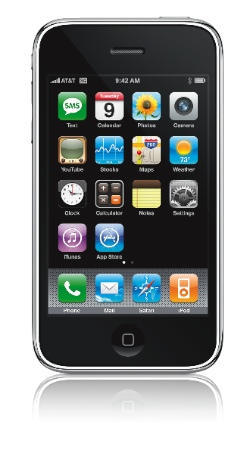
It works well on an iPhone, complete with a shiny icon if you decide to add it as a home screen bookmark. It’s great if you want to access your bookmarks on the move; what’s missing (and is equally important in my opinion) is a view of your network’s bookmarks.
I agree with Fraser Speirs – my Delicious network is a fabulous source of links, news, ideas and stuff of interest, and it’s compiled automagically for me every day by 58 people I know, like, and admire. I couldn’t live without it.
Apple and Nvidia may be sitting on a potential landmine of defective chipsets in new 15″ MacBook Pros, according to a report Tuesday at the Inquirer.
Citing questions stemming from problems affecting Dell, HP and Apple computers earlier in the year with failing chips due to bad materials and thermal stress, as well as a $200 million charge Nvidia took over the problem in July, the Inquirer commissioned researchers to take apart a new MacBook Pro and investigate Nvidia’s assurances that none of the bad chipsets made it into Apple’s new computers that began selling in the fall.
“A small lab of mad scientists who do not wish to be named, fearing repercussions from Nvidia and Apple” took an off-the-shelf 15″ MacBook Pro apart, desoldered the parts, and “cut the defenseless notebook into many pieces,” according to the report, examining what they found through a scanning electron microscope equipped with an X-ray microanalysis system.
The findings indicate the Nvidia GeForce 9400 GPUs in some unknown number of MacBook Pros are in fact afflicted with material, called “bad bumps”, the tiny balls of solder that hold a chip to the green printed circuit board it sits on, that will crack, causing the computer it is in to die.
The Inquirer article suggests that “barring a total failure of their lot-tracking system, [Nvidia] had to have known the Macbooks shipped with ‘bad bumps’.
Did Apple know? Calls to Apple PR were not returned prior to the story’s publication, and while that might look pretty damning, it isn’t. “Apple will not talk to journalists unless they are assured the response will be fawning,” according to the Inquirer report.
We’ll have to keep an eye on this story to see if the news affects sales of MacBook Pros and whether – or when – Apple support forums might begin to erupt with tales of dying notebooks.
Walmart could sell 4.5 million iPhones in 2009, equally the number of handsets sold by Apple retailers, Piper Jaffray analyst Gene Munster speculated Tuesday.
The analyst called the 4.5 million benchmark “achievable” if each of Walmart’s 3,500 stores sell 1,284 iPhones in 2009. Munster expects Apple’s 208 retail locations will sell 4.5 million iPhones.
“We do not believe that Street numbers accurately reflect the potential impact from Walmart stores on iPhone sales in 2009,” Munster told investors. The Piper Jaffray analyst retained his belief that 45 million iPhones will be sold next year.
Even credit-crunch era consumers will break out the plastic to buy an iPod in a new color.
USA today devoted an article on how shoppers aren’t color blind — especially when it comes to Apple mp3 players:
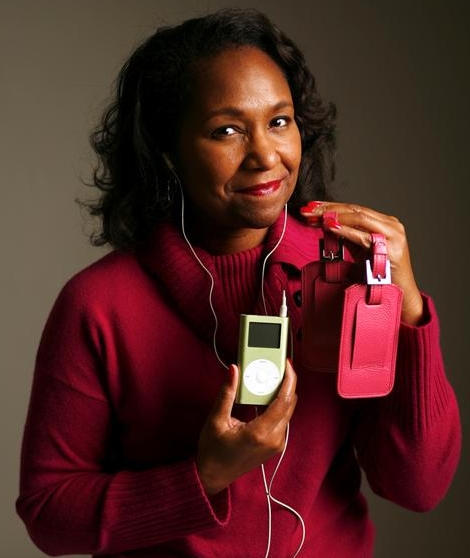
Nearly five years ago, Sally Trammer of Indianapolis, a senior systems analyst at Eli Lilly bought herself an iPod Mini specifically because it came in the color she craved: lime green.
Trammer was fully aware that this model stored far fewer songs than a full-size white or black iPod.
“I didn’t care, I just wanted to have that color,” she says. She recalls overpaying, too about $300. Then she purchased a fancy, lime-green leather case, to boot. “Regardless of what it cost, I knew I had to have it.”
Such consumer color devotion is a key element in iPod sales. Apple officials declined to comment, but retail expert Marshal Cohen of NPD says he’s spoken with plenty of adult iPod owners who bought new iPods specifically to get a new color. “This boggles the mind,” he says.
Color me a little astonished by the trend, too. A silver iPod nano is as far as I’ve strayed from classic white.
Fess up in the comments: have you bought a new iPod for the color, for yourself or for someone else?
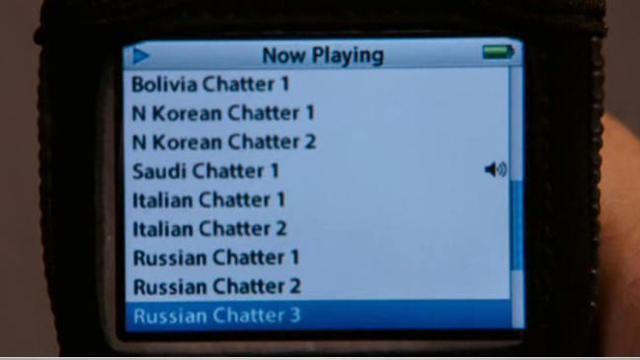
In the title sequence for 1960s spy-spoof turned film “Get Smart,” main character Maxwell Smart interprets intelligence chatter on his iPod.
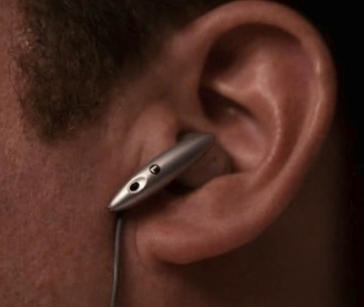
He’s first shown without the original earbuds, but shortly afterwards on his way to Control with white headphones plugged in, having traded the intelligence chatter for mood-boosting Abba’s “Take a Chance on Me.”
Arguably the best gadget in what should’ve been a gadget film (anyone hanker for a molar transmitter? Though the Cone of Silence might be nice ), to boost product placement in the movie Apple teamed up with Warner Bros to promote the film by giving away iPod Touch devices to journalists with pre-loaded film clips and having cast members make Apple store appearances.
Sony Ericsson Tuesday joined the Open Handset Alliance, becoming the latest cell phone maker to voice support for Google’s Android operating system.
Sony Ericsson has said it plans to adopt the Android software for several phones during 2009. The phone maker will drop t he Symbian UIQ phone software in favor of Google’s open-source Android platform, reports said Tuesday.
In a statement, Sony Ericsson announced it hoped to use Andriod to develop successful handsets along the lines of its popular Walkman MP3 players and Cyber-shot digital cameras.
Time Magazine has dropped the iPhone to third place in its annual poll of the top 10 gadgets. Is the luster wearing thin on Apple’s flagship product.
While crediting the iPhone for launching an “era of mobile computing,” when it comes down to performance the handset “doesn’t handle email as well as the cheapest BlackBerry, and as a telephone, it’s no better than most cell phones,” the magazine said.
“As a phone, the iPhone was never better than other handsets, and still isn’t today,” Avi Greengart, Current Analysis’ handset analyst, told Cult of Mac. The iPhone’s reception, microphone and speaker aren’t what makes the device special, Greengart said.
Apple is striving to change how people view the iPhone 3G compared to the first handset. Cupertino is encouraging journalists to describe the iPhone as a mobile computing platform, not as a phone.
In 2007, the first generation iPhone wowed Time’s reviewer, who wrote the Apple handset “changed the way we think about how mobile media devices should look, feel and perform.”
Although the iPhone dropped out of first place, the No. 1 spot in Time’s poll was given to an Apple-related product, the Optoma Pico PK-101 projector – an iPhone and iPod add-on. Second place was won by the first consumer laser TV set, the 65-inch Mitsubishi LaserVue TV.
Future home of Apple in Paris. (credit: lucbyhet/flickr)
Just days after opening its first retail store in Germany, Apple is set Dec. 13 to begin moving into its first store in France, located near the Louvre Museum.
Apple will move into a 7,700-square foot two-level store previously occupied by Résonances, a retailer that’s moving elsewhere in the underground shopping mall Carrousel du Louvre.
As part of the makeover, Apple first retail store in France will include a glass staircase that connects the two levels, according to Apple Insider.
The new store should open to the public by Fall 2009. Apple’s retail presence in France comes two years after company CEO Steve Jobs predicted a 2007 ribbon-cutting.
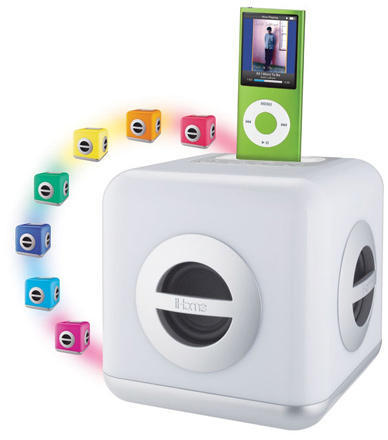
Here’s another inexpensive gift idea for your favorite iPod fan, iHome’s inexplicably named iH15W cubular docking station.
Actually, the name is easy enough to explain by the unit’s 15watt amplifier, which is probably strong enough to disturb the neighbors without actually rattling the windows. But the company might have gotten a little more play by naming it the iHome Mood Cube, since its distinctive feature is the ability to illuminate different colors, providing a changing atmosphere for both the music and your mood. You can select the color you prefer for the day, or let it cycle through all of them. Two Reson8 speakers and a built-in subwoofer spell the likelihood of decent sound, which, at $59.95 is priced right for that special someone on your “nice” list this holiday season.
A pair of electronics Phd candidates at Ottawa, Ontario’s Carleton University may have invented a process for wirelessly connecting the circuits of a mobile device to its antenna, allowing it to consume 12 times less power than traditional, wired-transmitter modules and lowering the overall cost of any hand-held device, according to a report at OttawaCitizen.com.
Atif Shamim and Muhammad Arsalan, together with their adviser Langis Roy of Carleton’s department of electronics, co-authored a paper describing a packaging technique to connect the antenna with the circuits via a wireless connection between a micro-antenna embedded within the circuits on the chip.
Their work was named the best paper at the European Wireless Technology Conference in November, whose judges praised the invention for “excellent integration of system design, material sciences and electromagnetic antenna design.” They also said the innovation is “highly relevant, with large potential for commercialization.”
Shamim has filed patent applications in the U.S. and in Canada, with the knowledge consumers continue to gripe about the short lifespan of the iPhone battery.
“It’s a common problem. There are so many applications in the iPhone, it’s like a power-sucking machine,” said Shamim.
Research on the invention is due to be published in the upcoming edition of Microwave Journal.
AdWords advertisers can now show desktop text and image ads on the iPhone, the T-Mobile G1, and other mobile devices with full (HTML) Internet browsers, Google announced Monday.
Google text and image ads can now point to desktop landing pages without advertisers needing to create mobile landing pages or ads in mobile formats. The ads can deliver mobile-specific calls-to-action and reach mobile users searching with their phones more than ever during the holiday season.
Recently, the Google mobile team launched new results pages formatted specifically for the iPhone, according to the post at Google’s Mobile blog. Now, advertisers will be able to display ads exclusively on these mobile devices, create campaigns for them, and get separate performance reporting. Advertisers who prefer not to show desktop ads on these phones can opt out and show ads only on desktop and laptop computers.
UBS analyst Maynard Um became the latest to douse cold water on talk of a $99 iPhone appearing on Wal-Mart shelves. Um said such a move would disregard Apple’s pricing practices.
“We believe a $99 iPhone would be atypical of Apple’s premium brand strategy,” Um told investors Monday. The analyst believed $149 would be more realistic for a 4GB iPhone.
Although others, such as Kaufman Bros.’ Shaw Wu last week called a $99 iPhone “inevitable,” Um said such a move would “cannibalize” sales of the 8GB and 16GB versions, cutting Apple’s share price by $0.27 in 2009.
Apple eliminated GPS functionality in order to sell the iPhone 3G in Egypt, the New York Times reported Monday. Cupertino’s acquiesense to the Egyptian government comes as the company negotiates entry into China’s 500 million consumers.
Apple silently modified the iPhone in the face of Egyptian concerns that GPS could be a military security risk, according to the newspaper. However, the changes come as governments attempt to put a lid on technology used by pro-democracy movements.
On the Egyptian iPhone Web page, Apple mentions 3G, Wi-Fiand Microsoft Exchange compatibility, but not GPS.
We all known Apple moves in mysterious ways, making changes that disrupt the lives of users with few warnings. Users Monday reported some movies are vanishing from the shelves of the iTunes Store.
Like in the Eagles’ “Hotel California,” a variety of movies can be bookmarked on iTunes but can’t check out. An error window appears when such flicks as Michael Clayton, Atonement and Charlie Wilson’s War are selected, according to Macworld.
The mystery may be some rights-management issue, although the movies involved span several studios, Ars Technica points out.
This isn’t the first time iTunes users have scratched their heads over movies available through iTunes. A recent uproar occurred after iTunes customers discovered new MacBooks included hardware-based copyright protection features which prevented some movies from playing on third-party displays.
Device maker Belkin said Monday it would pull-out of the upcoming Macworld Expo in order to concentrate on partners hurt by the crumbling economy.
The news confirms speculation from last week that Belkin would join Adobe and a growing list of Apple companies either bypassing or curtailing their involvement in the premiere Mac product showcase.
“We are not exhibiting at Macworld, but we will be holding meetings with our channel partners,” Belkin spokeswoman Melody Chalaban confirmed to Macworld. Belkin has also withdrawn from the Consumer Electronics Show.
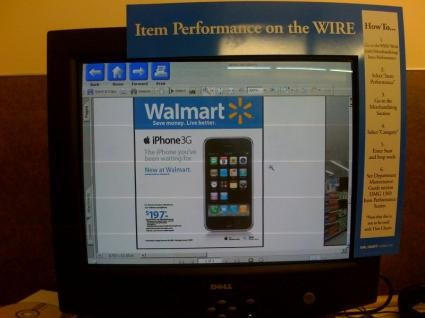
Wal-Mart employees have confirmed the retailer will begin selling the iPhone before the end of December, however talk of a $99 Apple handset remain mostly in the rumor stage.
Although neither the giant discount retail nor the exclusive carrier AT&T have officially disclosed their plans, both Bloomberg and the Mercury News quote retailers confirming the iPhone is set to be sold by Wal-Mart after Christmas.
Citing unnamed employees at five California Wal-Marts, Bloomberg Monday reported workers are being trained to sell the 8GB and 16GB iPhones. Friday, the Mercury News reported other California Wal-Mart managers were being trained to offer the iPhones.
Anytime you can pick up something for $50 that would otherwise cost you more than $450, it’s worth a second look. Such steep discounts can be a sign of utter worthlessness in some cases, in others, possibly a short-lived bargain you’re thankful to have come across.
MacUpdate has one such opportunity Mac users might want to take a look at. They even have a cute little countdown clock on the page telling you how long you’ve got left to decide to pull the trigger. At this writing the clock stands at 10d 21h 2m 42s.
Among the software titles in the bundle:
Drive Genius 2 ($99): Currently the highest-rated disk utility on the market. Used by Mac Geniuses at Apple Stores, Drive Genius diagnoses and repairs problems with your hard drive, optimizes your system, and much more. Buyers receive a link to download a bootable DVD image of the software to burn, which can be used to boot and fix any Mac that can run Mac OS X 10.5, including Apple’s newest laptops.
RapidWeaver 4 ($79): Create powerful, professional-looking Web sites quickly and easily.
MacGourmet Deluxe ($44.95): Think iTunes for food – track recipes, plan meals, manage wines, and more.
LittleSnitch 2 ($29.95): Monitors your network connection to make sure your Mac only sends out what you want it to.
KeyCue 4 ($27): Displays full keyboard shortcuts for all your applications; learn them and work faster.
MacPilot 3 ($19.95): Access hundreds of hidden features to customize and improve your Mac OS X experience.
iVolume 3 ($29.95): Ensures all your iTunes tracks play back at the same level, so you never have to adjust the volume individually.
There’s more. See the post at MacMerc or head on over to MacUpdate. The clock is ticking.
Just in time for getting a little bit of the backstory before the 25th Anniversary of Mac kicks into high gear, Computer Shopper has a great look back at the very early years of Apple Computers by Editor in Chief Emeritus Stan Veit. We’re talking early enough that Steve Jobs was willing to give away 10% of the company for $10,000, according to Veit.
The long article is well worth a read for Veit’s inside take on the two young, “long haired hippies and their friends” who eventually revolutionized the world. It’s not an especially flattering portrait of Jobs, though it’s had plenty of company on that score over the years. The article does contain some great early pics of Jobs and Woz and some of the earliest Apple gear.
Those in the business of making or selling music may be familiar with a lot of the information, but FATdrop drops a lot of interesting tidbits for music fans, artists and industry types alike.
The post confirms that Apple pays between 60-65-cents for each 99-cent song download through its service, doesn’t demand exclusivity and offers various marketing tools, including a link maker and Tell-a-Friend, a viral email marketing tool.
If you’re interested in learning a bit about the world of digital distribution Apple created with iTunes, or curious about the raft of other concerns offering their spin on the platter, the FATrrop piece is worth checking out.
FATdrop is a digital music delivery company which this week won a prestigious Digital Media Award for ‘Best Breakthrough Business 2008″² in recognition for the growth and success it’s achieved with its digital promo service, used by industry to manage pre-release music.
You may have heard that one of the linchpins of the federal government’s multi-pronged effort to save the crumbling American economy may include Uncle Sam himself underwriting home loans at 4.5%.
What better time then, to spend $4.99 on an iPhone app that may help you navigate the treacherous waters of real estate finance and help you make sound financial decisions for you and your family?
Foggy Noggin Software’s Loan Shark app is a timely, easy to use loan calculator. Enter the information you know, click a button for the field you want calculated, and Loan Shark fills in the amount for you.
With Loan Shark for iPhone and iPod Touch (requires 2.0 update) you can:
* Enter loans from different banks and save for later comparison.
* Calculate how long it will take to pay off credit cards.
* Determine how much in interest loans are costing you.
* See in real time how an extra payment a year affects your loan.
* Easily compare loans to see which is best.
The app lets you calculate any component of the loan, including payment, interest rate and loan amount; see the full Amortization Table for the lifespan of the loan; set your local currency in preferences; find Banks in your area. It also calculates semi-annual interest for Canada and other countries.
Foggy Noggin has some other cool looking software projects, too, including desktop and cookie managers, so be sure to check out their website.
Blogger Rick Yeager has launched iPod and AppleTV podcast versions of his whimsical on-line gadget guide.
The fast-paced podcasts feature a no-nonsense style that one reviewer describes as “perfect for people who want to learn something or pick up a new skill quickly without enduring the news digest format used by other podcasters.” Yeager’s takes on gadgetry feature instructional info and tips and tricks for the Mac-curious, geeks and professionals alike.
The MacMerc podcast subscription is free on iTunes.
When I think of high-powered, busy professionals the first word that comes to mind is not “Zen” but that certainly has not stopped Hladecek from marketing its new collection of iPhone ringtones as “Professional ringtones designed with executives and the fashion-forward in mind.”
The iRingPro Zen Collection is 21 tones, among which you’ll find no annoying songs, or silly sound effects. The collection consists of tones – not “tunes” – that are “smart, attractive, livable alerts engineered to ensure universal appeal, and provide a high tolerance for routine use and repetition.”
Each tone features moderately longer pauses between ring repeats than what many are used to. The designers believe this cuts down on the hurried fumbling that can occur when a cell phone rings unexpectedly, giving you time to see who’s calling, often before the second ring.
And of course there is the personal branding that comes from your ringtone. A snippet of “My Humps” or “The Immigrant Song” says something about you. iRing Pro ringtones seek to ensure that what is perceived when your phone rings is technically advanced, considerate, and enviably fashionable.
The Zen collection sells for $9.95 and is available for download directly from the designer. They come in “Meeting Grade” and “Active Grade” styles, with the meeting tones being subtler, lower pitched, and richer, while the active tones are stronger, more resonant, and present. Om, baby.
Stop me if you’ve heard this one, but Greystripe, a San Francisco-based rich media advertising platform for mobile content claims to have developed ads including Flash IAB medium rectangles and game-in-game (or “tailgate”) ads giving advertisers the ability to target the iPhone audience for the first time with Flash content.
In an effort to make it easier for the online media buyer to purchase mobile, Greystripe claims to have brought creative power to the iPhone with Flash creation tools allowing brands to extend any online advertising campaign directly into mobile content as well as the ability to create miniature advertiser-branded games in Flash and place them before, during or after existing iPhone games.
“Using the iPhone’s revolutionary platform, Greystripe has solved the serving, reporting, third-party tracking and, best of all, ad creation problems that have plagued the mobile advertising industry since inception,” says Michael Cai, Director of Digital Media and Gaming at Parks Associates, according to a BusinessWire release made public on Thursday.
Michael Chang, CEO and Co-founder of Greystripe was quoted as saying, “We have made it easy for advertisers by removing barriers to execution. Brands like Jeep, RadioShack, New Line Cinema, Rock the Vote and Yahoo! have seen strong results.”
If true, this would seem to come as news to Adobe, which claims to have been thus far stymied in the effort to develop a mobile version of Flash that is compatible with Apple’s SDK for iPhone developers.
We reported last week on developer/blogger Erica Sadun’s discovery of an undocumented feature in Apple’s iPhone SDK that allows video out from an iPhone to be displayed on a TV monitor. Friday she revealed what is sure to become a popular exploit of this feature.
Sadun contacted developers at Freeverse, producers of the popular mobile game Moto Chaser and convinced them to create a TV version of their game. In a few hours, Freeverse code monkeys were able to come up with the demo version of Moto Chaser featured in the video above, which seems to herald happy days ahead for fans of iPhone gaming.
The detailed technical ins and outs of how Freeverse managed to pull off its feat are available in Sadun’s post at Ars Technica, but it’s worth noting that the TV version of the game played best on the second-generation iPod touch. The newer touch is built on a 532MHz CPU versus the original iPhone’s 412MHz. This extra speed helps up the frame rate produced by the device, the key component for any first person interactive video game.